

Weeds sprayed with vinegar can turn brown within hours, leaving their leaves dry and damaged. The change looks like a successful treatment, but brown foliage doesn’t mean the entire plant has died. Some weeds retain living roots and growing points beneath the soil, allowing new shoots to appear after the damaged leaves fall away.
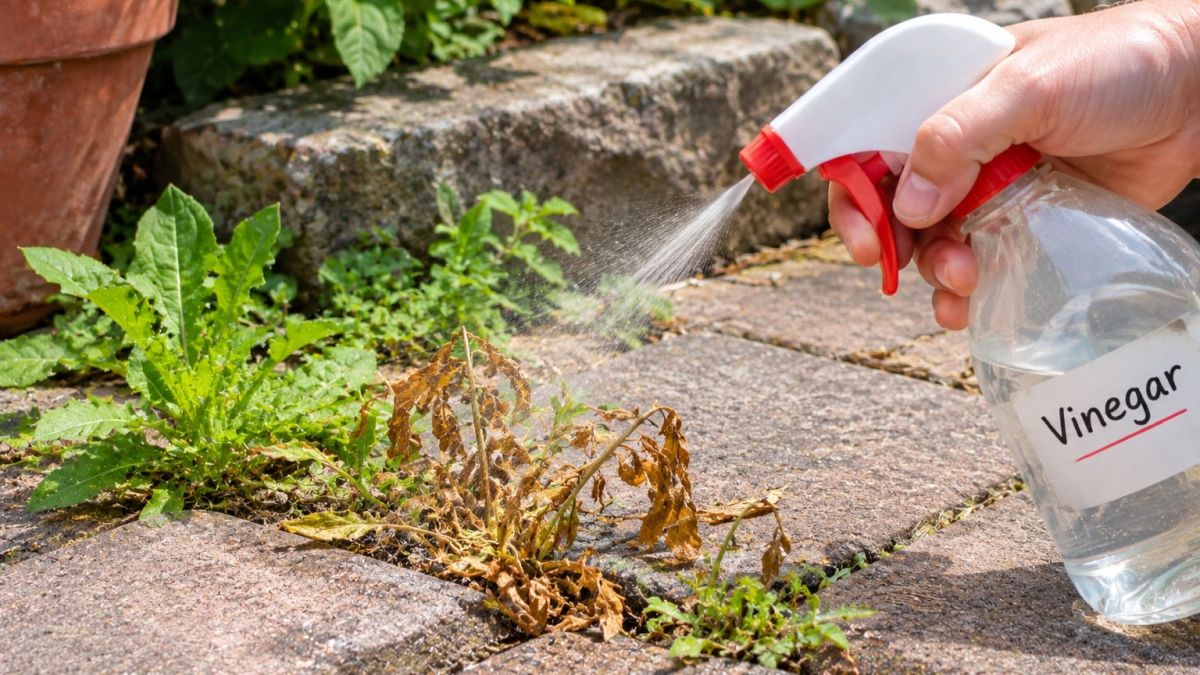
Vinegar contains acetic acid, a substance that damages plant cell membranes and causes exposed tissue to lose moisture. Unlike systemic herbicides that move through a plant, acetic acid acts where the spray makes contact.
Research comparing different concentrations found that stronger acetic acid treatments produced greater weed control, although results varied between broadleaf weeds and grasses. The distinction matters because household vinegar contains about 5% acetic acid, while some experimental treatments used 20%.
Vinegar Burns Exposed Leaves but May Leave Roots Alive
Acetic acid disrupts cell membranes in plant tissue, causing cells to lose their contents and leaves to dry out.
This makes vinegar a contact herbicide. The damage occurs on the stems and foliage reached by the solution rather than spreading through the entire root system.
Young annual weeds can be more vulnerable because their growing tissues are exposed and their root systems are less developed.
Established perennial weeds present a different problem. Dandelions, for example, can produce new leaves from surviving crowns and roots after their foliage has been damaged.
Grasses may also recover when their growing points remain protected near the soil surface.
The brown leaves left after treatment show that the acid damaged the exposed tissue. They don’t establish whether the roots or other growing structures survived.
This explains why repeated applications may appear to work for a few days before green shoots return.
Researchers Tested Different Vinegar Concentrations on Weeds
A 2018 study published in the Journal of Agricultural Science examined acetic acid as a weed-control treatment in southeastern Oklahoma.
Researchers compared three concentrations: 0%, 5%, and 20% acetic acid.
The trials also evaluated different application volumes and mixtures containing canola oil or orange oil.
Weed control increased as the concentration of acetic acid rose.
The strongest overall result came from 20% acetic acid combined with a higher application volume and canola oil, producing 74% overall weed control under the study conditions.
Broadleaf weeds responded better than grasses. Some broadleaf treatments achieved at least 84% control, while the strongest treatments against grasses produced results ranging from 44% to 63%.
The study included large crabgrass (Digitaria sanguinalis), carpetweed (Mollugo verticillata), and cutleaf evening primrose (Oenothera laciniata).
These results don’t mean that spraying household vinegar will eliminate 74% of weeds in a garden. That figure came from a specific treatment using a concentration four times stronger than standard 5% vinegar.
Concentrated horticultural vinegar also presents greater safety risks. Products containing 20% acetic acid can cause serious eye injuries and skin burns, so they shouldn’t be treated as ordinary kitchen vinegar.
Use only products labeled for the intended weed-control application and follow their safety and environmental instructions. Vinegar can also damage grass, flowers, and other desirable plants if the spray reaches their foliage.
For weeds growing between patio pavers, removing the plant and its roots may provide more lasting control than burning the exposed leaves.
Vinegar can damage and kill exposed weed tissue, but surviving roots and growing points can produce new growth. The concentration of acetic acid and the type of weed determine how much control the treatment provides.
Sources: FAO AGRIS — 2018 Acetic Acid Weed-Control Study, University of Maryland Extension, National Pesticide Information Center


Leave a Reply