

Patio pavers can develop dark stains, greasy patches, and green buildup after months of rain, fallen leaves, and outdoor use. Sweeping removes loose debris, but stains left on the surface often need water, a cleaning agent, and a brush. One method uses a product intended for washing clothes rather than cleaning stone or concrete.
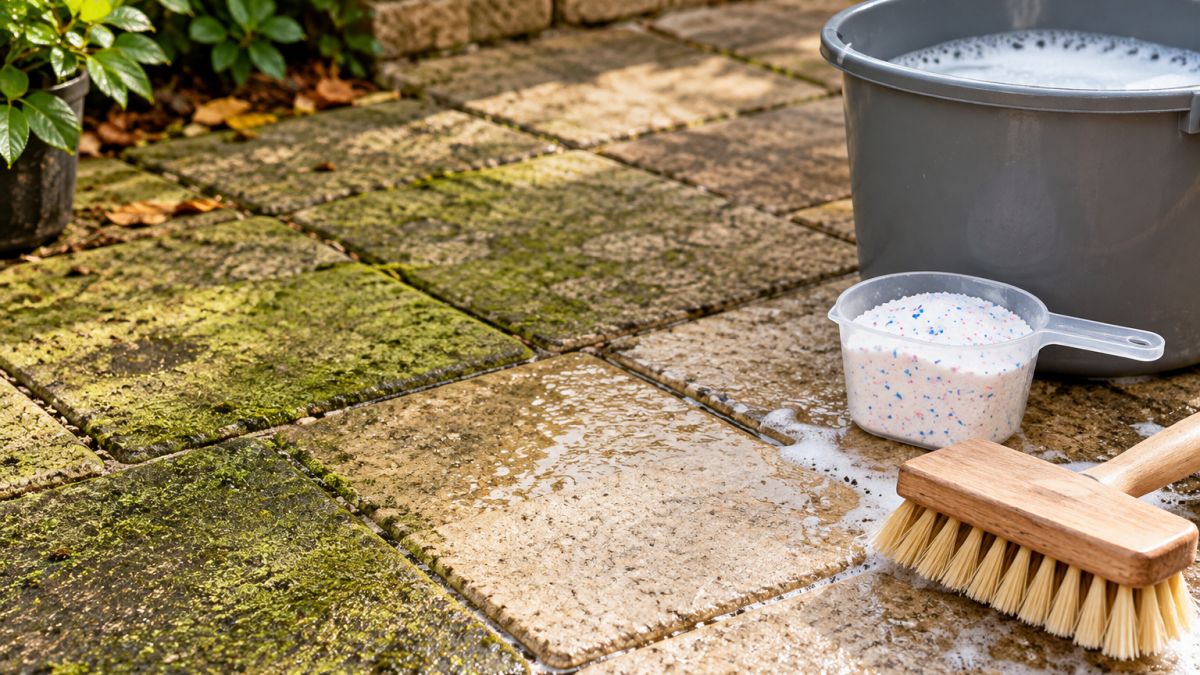
Biological laundry detergent contains enzymes that break down certain types of organic stains. Proteases target proteins, lipases act on fats, and amylases help break down starches. These ingredients can assist with removing some food residue and grease from paving.
The method involves mixing laundry powder with warm water, leaving the solution on the pavers for about 10 minutes, then scrubbing and rinsing. However, the enzymes don’t guarantee removal of moss, algae, or mineral stains, and not every paving material can tolerate laundry detergent.
Biological Laundry Detergent Breaks Down Certain Organic Stains
Laundry detergents contain surfactants that help loosen dirt and oily residue so water can carry them away.
Biological varieties add enzymes that target substances found in common household stains.
Lipases help break down fats, while proteases act on proteins from food and other organic material. Amylases target starch-based residue.
On patio pavers, these ingredients may help loosen certain deposits left by outdoor meals, spilled food, and other organic sources.
The enzymes don’t work against every type of discoloration. Rust, mineral deposits, and some stains require different treatments.
Green buildup presents another limitation. Moss and algae can grow within textured paving and between joints, where a short detergent treatment may not remove them.
Laundry powder isn’t a substitute for a product designed to control moss or algae, and claims that it kills these organisms depend on the formulation and treatment conditions.
The detergent also contains ingredients beyond enzymes, including surfactants and other additives that may leave residue if the surface isn’t rinsed.
How to Clean Patio Pavers With Laundry Powder
Before using laundry detergent, check the paving manufacturer’s cleaning instructions. Some natural stone, sealed surfaces, and jointing materials require specific products.
If the material permits detergent cleaning, begin by moving garden furniture and sweeping away leaves, soil, and loose debris.
Mix a small amount of biological washing powder with warm water in a bucket, following the product’s dilution guidance where available.
Test the solution on a concealed section of paving and check for discoloration or surface changes before treating a larger area.
Apply the diluted detergent to the stained section and allow it to remain for about 10 minutes, without letting the solution dry on the surface.
Use a soft-bristled brush to scrub the pavers, taking care around the joints between blocks.
Avoid aggressive scrubbing that could remove jointing sand or damage the paving finish.
Rinse the treated area with clean water to remove loosened dirt and detergent residue.
Keep the cleaning solution away from surrounding plants, ponds, and storm drains. Laundry detergent isn’t formulated for unrestricted outdoor discharge, and some ingredients can harm aquatic organisms.
For patios with extensive moss or algae growth, use a treatment approved for the paving material and follow its environmental precautions.
Biological laundry detergent can help break down certain organic stains because of its enzymes, but the result depends on the stain, paving material, and cleaning method.
Leave a Reply