

Ground beef can release a surprising amount of liquid when it hits a hot skillet. Instead of browning, the meat sits in its own juices, turning gray before a crust has time to form. Adding more heat may evaporate the liquid, but it can also leave the beef dry.
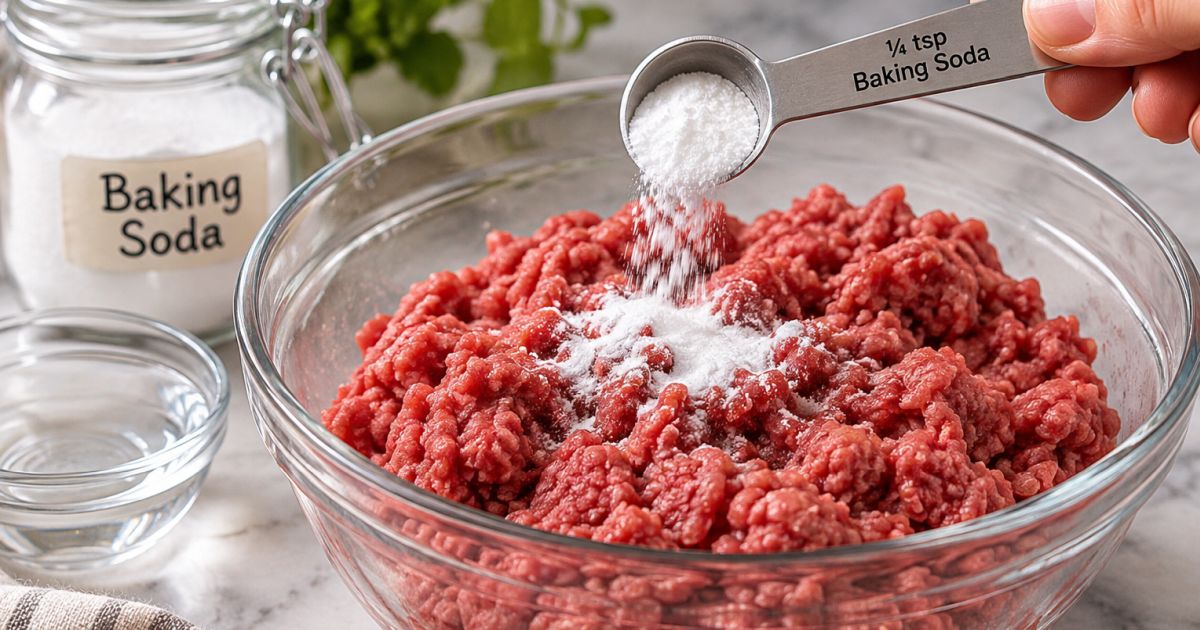
A small amount of baking soda mixed into raw ground beef before cooking can change how the meat holds moisture. Baking soda raises the pH of the meat’s surface, affecting how its proteins behave when exposed to heat.
The method takes about 15 minutes of resting time and works with ground beef intended for tacos, chili, meat sauces, and other skillet dishes. It doesn’t replace proper browning, but it can reduce moisture loss during cooking.
Baking Soda Changes How Ground Beef Proteins React to Heat
Ground beef contains muscle proteins that contract as the meat cooks, forcing some water out into the pan.
Baking soda, or sodium bicarbonate, is alkaline. When mixed with ground beef, it raises the pH of the meat and changes the electrical charges on its proteins.
This helps the proteins retain more water as temperatures rise, reducing the amount of liquid released during cooking.
With less moisture collecting in the skillet, the beef has a better chance to brown instead of steaming in its own juices.
Baking soda also promotes Maillard browning, the chemical reaction between amino acids and sugars that creates browned flavors on cooked meat.
The effect depends on the amount used. Too much baking soda can leave an unpleasant alkaline taste and change the meat’s texture.
Baking soda doesn’t add fat or replace the flavor created by browning. Its purpose is to change how the meat responds to heat.
How to Add Baking Soda to Ground Beef Before Cooking
For one pound (454 grams) of ground beef, use:
- ¼ teaspoon baking soda
- 1 tablespoon water
Mix the baking soda with water until dissolved, then distribute the solution across the raw ground beef.
Fold the meat to spread the mixture without compressing it into a dense mass.
Let the beef rest for 15 minutes before cooking. Keep it refrigerated during the resting period.
Heat a skillet over medium-high heat, adding a small amount of oil if the beef is lean.
Spread the ground beef across the hot surface and allow it to brown before breaking it into smaller pieces.
Avoid overcrowding the skillet, since too much meat can lower the pan temperature and cause moisture to collect.
Turn and break apart the beef as browned sections develop, then continue cooking until no raw portions remain.
Ground beef should reach an internal temperature of 160°F (71°C) for food safety.
The baking soda treatment can help retain moisture, but pan temperature, meat quantity, and cooking time still determine the finished texture.
Baking soda changes the pH of ground beef, helping its proteins retain water and allowing more browning before excess moisture collects in the pan.
Sources: America’s Test Kitchen via PBS, The Kitchn — Why You Should Add Baking Soda When Cooking Ground Beef, Scientific study — Functional Properties of Bicarbonates on Ground Beef
Leave a Reply