

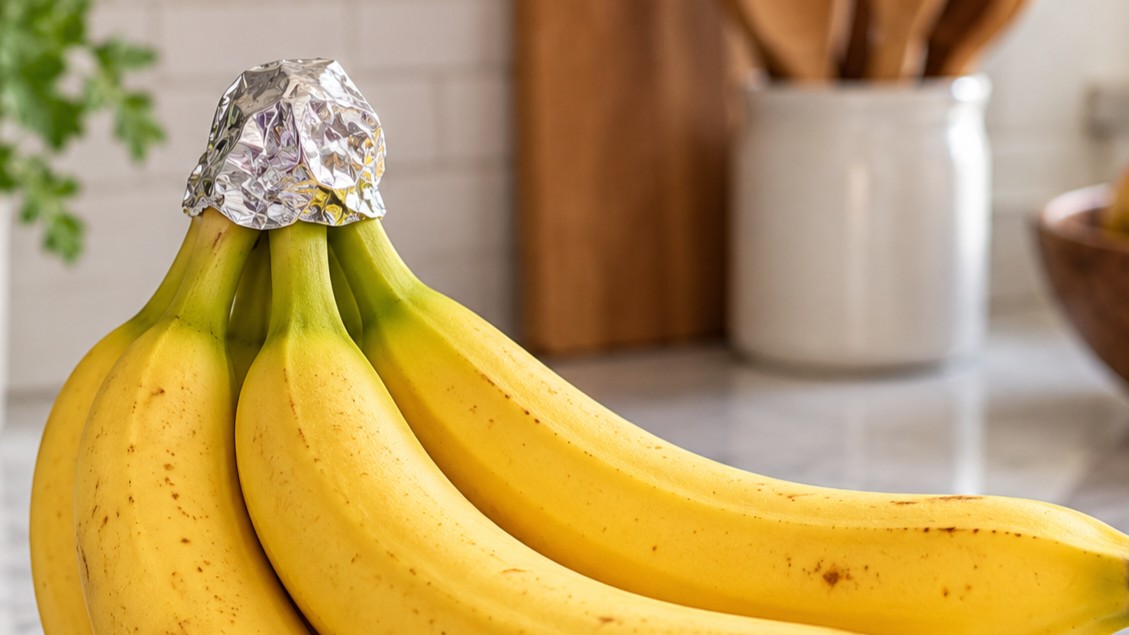
A bunch of bananas sits on the kitchen counter with a piece of aluminum foil wrapped around the joined stems. The fruit looks untouched, but the foil is supposed to slow the browning that turns yellow bananas spotted and soft within days. The trick has become a common storage recommendation, although the explanation behind it raises questions.
Bananas release ethylene, a natural plant hormone that helps regulate ripening. As the fruit ripens, starches turn into sugars, the flesh softens, and the peel changes from green to yellow before developing brown spots.
Wrapping the stems is intended to slow this process by limiting the movement of ethylene around the top of the bunch. But foil doesn’t stop bananas from producing the gas, and covering the stems doesn’t guarantee that the fruit will remain yellow for longer.
The Foil Covers the Stems, but It Doesn’t Stop Ethylene Production
Bananas continue ripening after harvest because they produce and respond to ethylene gas.
Ethylene triggers changes inside the fruit, including the breakdown of starch into sugar and the softening of cell walls.
The ripening process also affects chlorophyll in the peel, causing green bananas to turn yellow. Brown spots appear as ripening progresses.
Wrapping aluminum foil around the crown of a banana bunch creates a physical barrier over part of the stem area.
The idea is that this barrier reduces the movement of ethylene from the stems toward the surrounding fruit.
However, bananas release ethylene from more than their stems. The fruit continues producing the gas as it ripens, even when the crown is covered.
Aluminum foil also doesn’t absorb or destroy ethylene.
The supplied storage advice doesn’t provide controlled test results showing how much longer bananas last when their stems are wrapped.
Foil may change gas movement around the crown, but it cannot switch off the ripening process.
Temperature and Storage Conditions Also Affect Browning
Bananas ripen faster in warm conditions, making a hot kitchen counter or sunny windowsill a poor storage location.
Keeping unripe bananas in a cool room, away from direct sunlight and heat sources, can help prevent rapid ripening.
Bananas also release ethylene that can influence nearby produce. Separating them from other ethylene-sensitive fruits and vegetables can help manage ripening across the kitchen.
A banana hanger may reduce pressure marks and bruising by keeping the fruit from resting against the countertop.
Once bananas reach the desired ripeness, refrigeration can slow further softening.
The peel may turn brown or black in the refrigerator because bananas are sensitive to cold, but the flesh can remain suitable to eat.
Refrigeration is best reserved for ripe bananas rather than green ones, since cold temperatures can interfere with normal ripening.
Foil and plastic wrap remain popular stem-covering methods, but neither replaces temperature control or suitable storage.
The difference is between slowing ripening and preventing it. Aluminum foil covers the banana stems, but the fruit continues producing ethylene and changing as it ages.


Leave a Reply