

Coleslaw can start with crisp cabbage and turn watery after sitting in the refrigerator. Dressing collects at the bottom of the bowl, while the shredded vegetables lose their firm texture. The problem comes from moisture inside the cabbage, which can escape after the dressing is added.
Salting shredded cabbage before mixing the dressing helps remove some of that water. Salt draws moisture from the cut leaves through osmosis, reducing the amount released into the finished coleslaw.
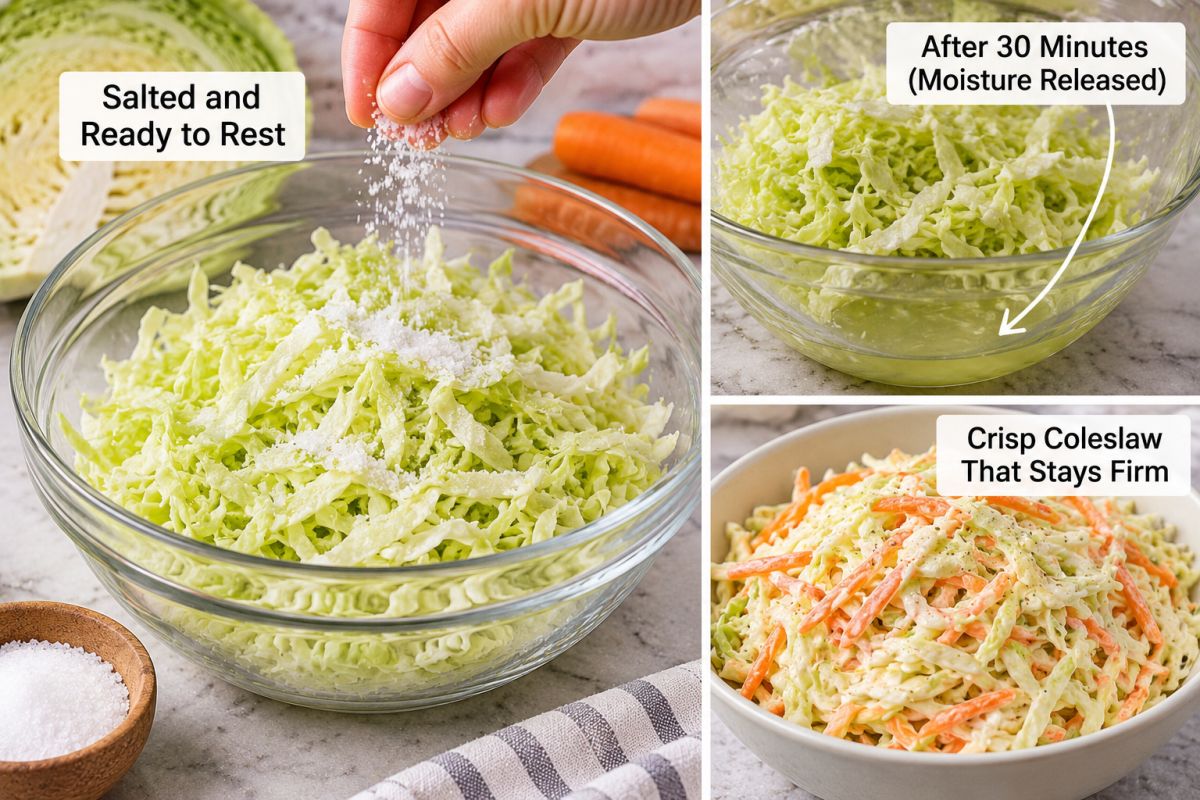
The method requires about 30 minutes of resting time, followed by draining and drying. It can help cabbage retain a firm bite while preventing excess water from thinning the dressing.
Salt Draws Water Out of Shredded Cabbage
Cabbage leaves contain water held inside plant cells. Cutting the leaves into thin strips exposes more surfaces and damages some of those cells.
When salt comes into contact with the shredded cabbage, it creates a concentration difference between the moisture inside the cells and the surrounding surface.
Water moves out of the cabbage through osmosis, collecting in the bowl as the salt dissolves.
This process reduces some of the moisture that would otherwise enter the dressing after the coleslaw is assembled.
The cabbage also becomes more flexible as it loses water, but it can retain a firm bite when the salting period is controlled.
Salt doesn’t make cabbage crisp through dehydration alone. The finished texture depends on how much moisture is removed, how thin the cabbage is cut, and how long it rests.
Leaving shredded cabbage in salt for too long can soften it beyond the desired texture.
How to Salt Cabbage Before Making Coleslaw
For approximately one pound (454 grams) of shredded cabbage, start with:
- 1 pound shredded green or red cabbage
- 1 teaspoon fine salt
- Coleslaw dressing of your choice
Remove damaged outer leaves, wash the cabbage, and cut it into thin strips.
Place the shredded cabbage in a large bowl or colander and sprinkle the salt across the surface.
Toss the cabbage to distribute the salt, then leave it to rest for 30 minutes.
During this period, moisture begins collecting beneath the shredded leaves.
Transfer the cabbage to a colander if it isn’t already in one and allow the liquid to drain.
Rinse the cabbage under cold water to remove excess surface salt, then drain again.
Spread the shredded cabbage across a clean kitchen towel or paper towels and press out remaining moisture.
Drying matters because water left on the leaves can dilute the dressing even after the salting step.
Add shredded carrots or other vegetables after the cabbage has been drained, then combine with the dressing.
Taste before adding more salt, since some seasoning may remain in the cabbage.
For coleslaw prepared ahead of serving, refrigerate the finished dish at 40°F (4°C) or below.
The method works with vinegar-based and mayonnaise-based dressings, although the amount of liquid released depends on the cabbage and preparation.
Salting removes some water before the dressing goes in, reducing the liquid that can collect at the bottom of the bowl while preserving a firm cabbage texture.
Sources: Serious Eats — The Food Lab’s Creamy Coleslaw, Encyclopaedia Britannica — Osmosis, USDA Food Safety and Inspection Service
Leave a Reply