
Brown edges on a prayer plant are a record of stress, not a fertilizer request. The useful clues are in the rest of the plant and its surroundings: how the pot drains, whether the soil stays wet, what light reaches the leaves, and what changed before the damage appeared.
“Prayer plant” also covers more than one plant in everyday conversation. For Maranta leuconeura, NC State’s Plant Toolbox describes care centered on indirect light, moisture, and humidity. Confirm the plant’s identity before following a routine meant for a different species.
Read the pot before treating the leaves
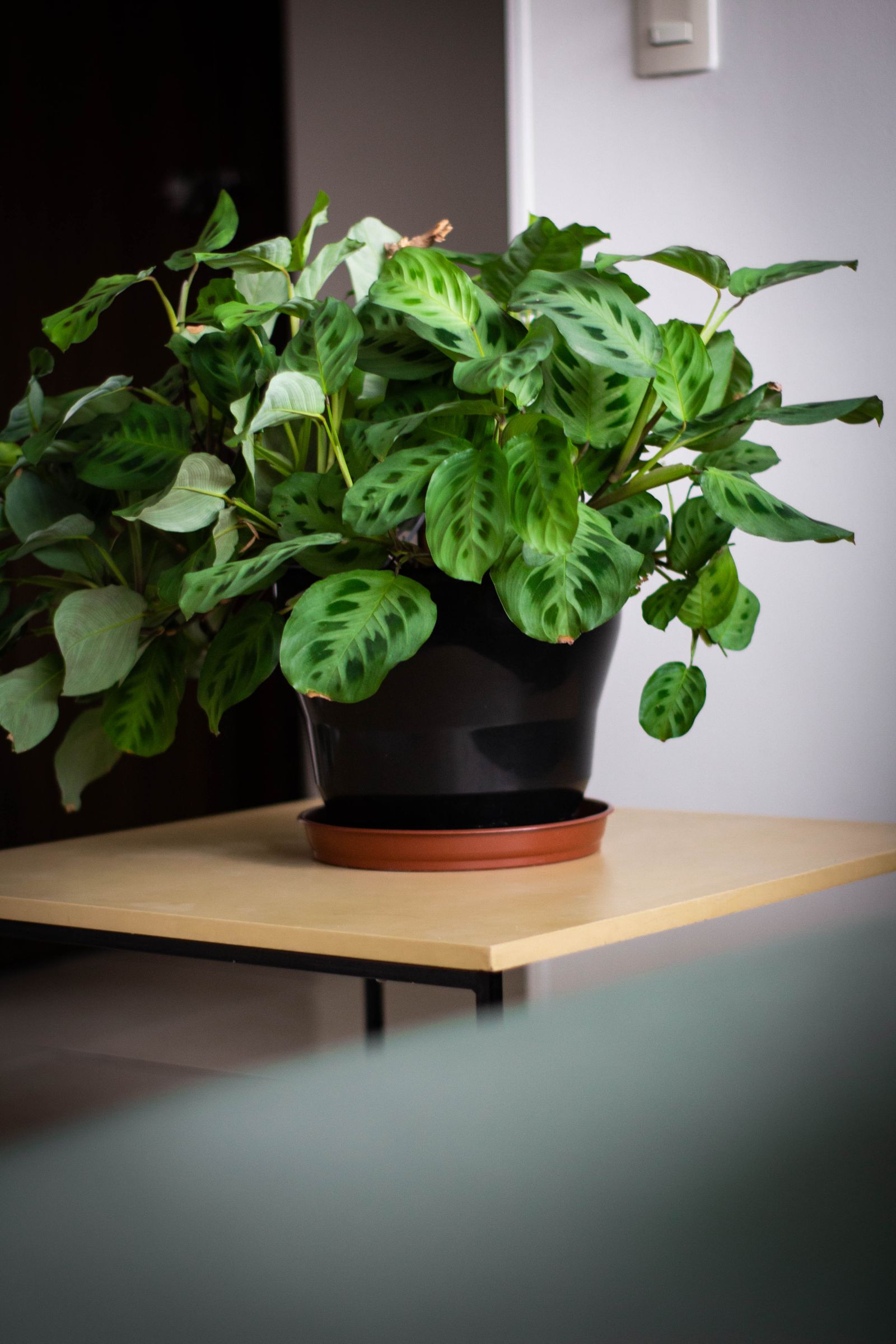
Check the growing mix and drainage rather than adding water because a leaf looks dry. A pot that remains saturated and one that dries out between overlooked waterings need different corrections. Remove standing water from an outer container, and record how long the mix takes to change after watering.
Illinois Extension recommends moist soil, bright indirect light, warmth, and high humidity for Maranta. It also calls for allowing some drying between waterings in winter and warns against water standing on the crown, where stems can rot. A rigid summer timetable does not account for a different indoor season.
Compare the old location with the current one
Think back to a move, a heating system coming on, or a curtain being removed. The same window can provide different conditions across the year, and a nearby radiator adds another variable. Check where direct sun falls during the day rather than assuming a room described as bright is bright in the right way.
If you change the location, note the date and leave the plant in a suitable spot long enough to observe the response. Moving it from one extreme to another whenever a leaf looks imperfect makes the sequence harder to interpret.
Use new growth to assess the adjustment
Photograph the plant and mark which leaves already have damaged edges in your notes. Compare later growth and whether the damage spreads, rather than expecting an old brown edge to turn green. This helps you judge whether an adjustment is helping without adding several treatments at once.
Before feeding, check the product label, season, and whether the plant is growing. Brown tips alone do not tell you it lacks nutrients. If damage continues after checking the basic conditions, share clear photos of the whole plant, soil, and pot with a local extension service instead of guessing at a pest or disease.
NC State also identifies high fluoride levels and over-fertilizing as possible causes of leaf burn. That makes a record of your water source and feeding history useful when asking for help; it does not mean every brown edge proves a water-quality problem.
Water quality is another part of the care record worth noting. Our article on tap water and houseplants explains why a plant’s needs and your water supply matter more than a universal rule.