

Running your fingers over a plate straight from the dishwasher should not feel like touching fine sand. When grit appears after a cycle, changing detergent may seem like the obvious next move, but trapped food in the filter is worth checking first. It is one part of the machine you can inspect before deciding that your usual product has stopped working.
The filter catches material during washing, and its condition can affect performance. Bosch’s filter-cleaning instructions recommend removing food debris with running water, mild soap, and a soft brush. The removal and locking procedure must match your dishwasher, so find the model’s manual before twisting an unfamiliar part.
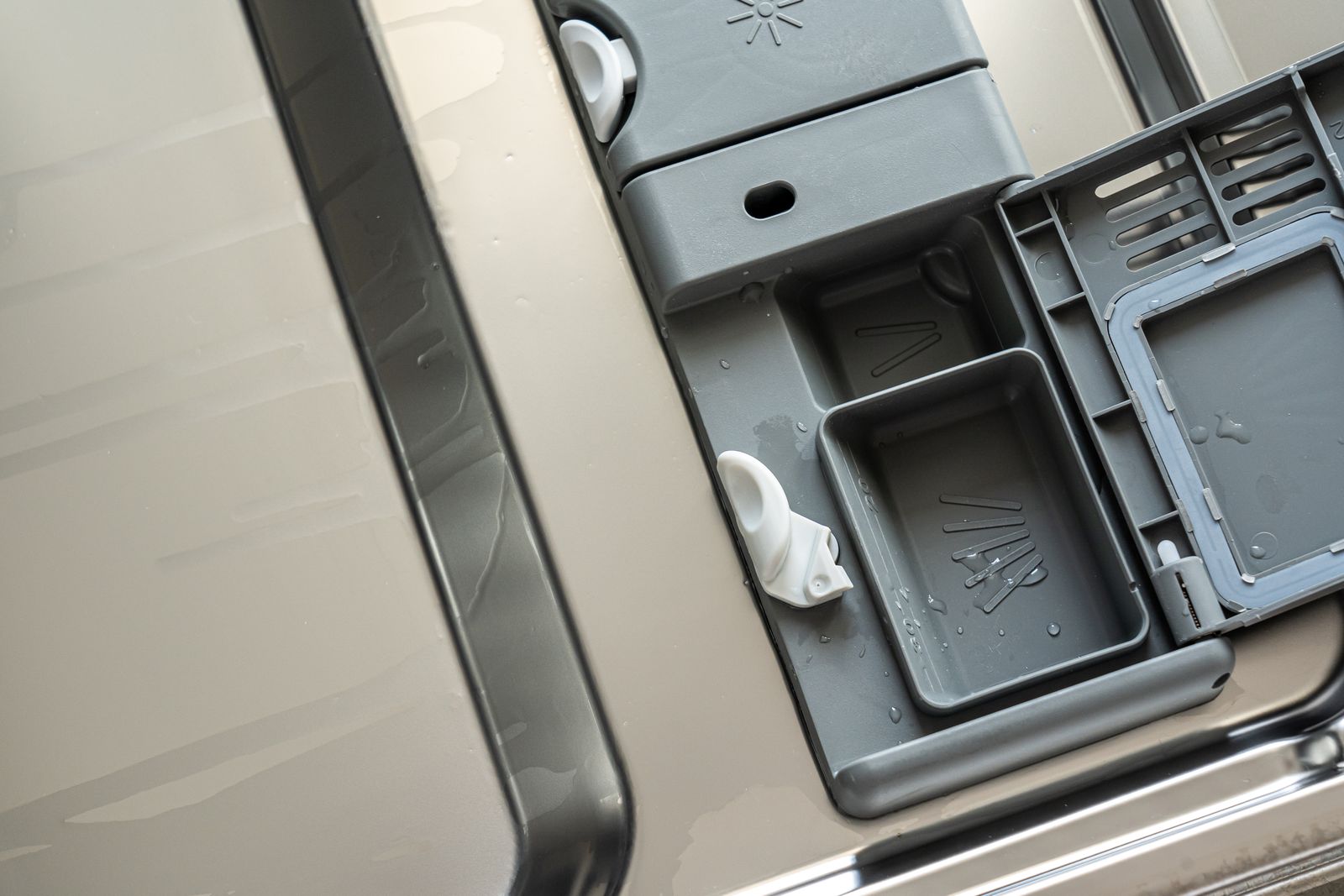
Empty the dishwasher and let hot parts cool before inspection. Locate the filter in the owner’s instructions rather than assuming every machine has the same removable cylinder. Note how the assembly sits and how it locks; a photo can make reassembly easier.
Follow the manual’s precautions for cleaning and power isolation. Watch for broken glass or other sharp debris and do not reach into a concealed opening by feel. If the filter will not release as described, stop instead of using a tool to force it.
Clean the mesh without damaging it
Lift the assembly as instructed and rinse away loose material. Use the cleaning method approved for the filter, working with a soft brush where permitted rather than a wire brush or abrasive pad. Inspect the mesh for damage and reinstall every component in its correct locked position.
Check the manual’s maintenance schedule, too. Household use, loading habits, and the filter design affect the work required; an interval for a different model is not a substitute for the instructions that came with yours.
If grit remains, follow the wash path
A clean filter does not rule out other causes. Whirlpool’s troubleshooting guide also covers loading, spray arms, and detergent as parts of cleaning performance. Check whether a large pan blocks a spray arm, whether dishes prevent the dispenser from opening, and whether food has been scraped off before loading.
Keep detergent changes measured and use a product intended for automatic dishwashers. A cloudy mineral film, undissolved detergent, and loose food particles are different observations; tell the manufacturer which one you see rather than describing all of them as “dirty dishes.”
Run a normal load after correcting the maintenance issue and compare the result. If residue persists, use the model’s troubleshooting process or arrange service. A filter inspection is a sensible first check, not proof that every gritty plate has the same cause.