

If you fill a pitcher at night so the tap water will be ready for your houseplants in the morning, check one word in your water utility’s report first: chloramine. The overnight trick depends on which disinfectant your utility uses. A pitcher on the counter can let some free chlorine dissipate. The same wait leaves chloramine in the water.
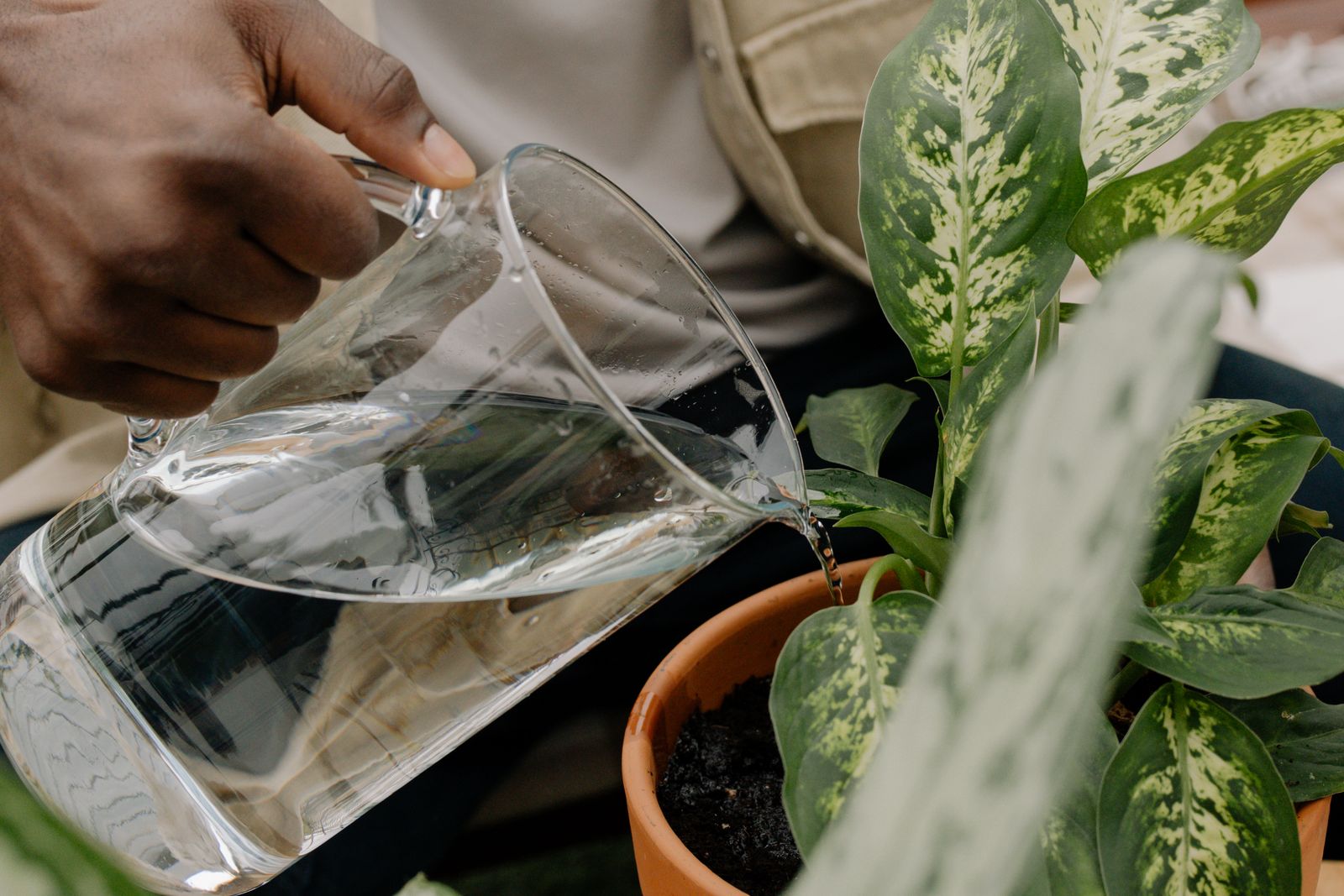
What a night on the counter actually changes
Utilities use chlorine or chloramine to kill germs in drinking water. Chloramine lasts longer in the distribution system, which helps it keep working as water travels through the pipes. The EPA’s guidance on monochloramine says that leaving water at room temperature does not remove it. If you want to know what’s in your pitcher, look up your utility’s water quality report or ask the utility which disinfectant it uses at your address.
What that means when you water your plants
For ordinary watering, the distinction may change your routine more than your plants. Pinellas County Utilities, which supplies chloraminated water, says customers can use it on plants, vegetables, and fruit and nut trees. You can still fill the pitcher before bed if that’s convenient. If you’re doing it to remove chloramine, the extra step serves no purpose.
The pitcher has a different job if you also use it to top off a fish tank. Water that’s fine for houseplants needs to be treated for chloramine before it goes into an aquarium. Check the label for an aquarium conditioner that specifies chloramine, and follow the directions for the amount of water you’re adding.