
Wilting chrysanthemums do not tell you how much water is in their pot. A plant with dry roots and one sitting in wet compost can both droop, leaving you with two different problems that look alike from the porch steps. Feel the growing mix and look at where the last watering went before deciding what to do next.
Illinois Extension makes the distinction in its guide to fall mums: wilting from too little water can resemble the effects of overwatering. The flowers alone cannot tell you which condition is present.
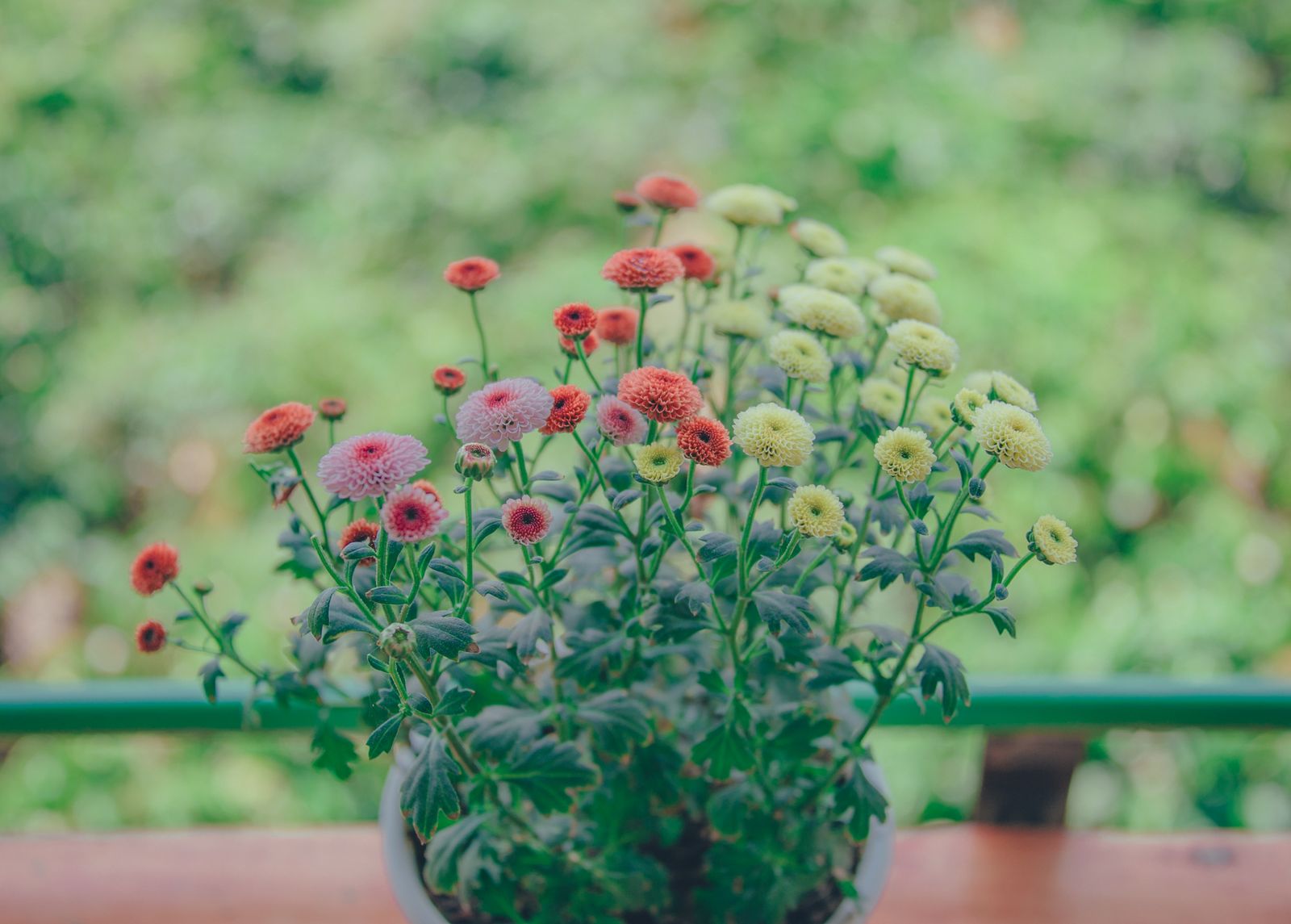
Check beneath the flowers and inside the outer pot
Move the foliage aside so you can reach the potting mix rather than judging the plant from its canopy. Feel the soil and lift the container, if its weight allows, to learn the difference between a watered pot and one that has dried out. Illinois Extension recommends checking moisture instead of watering on an automatic schedule in mild weather.
Next, check the nursery pot inside its decorative cover. A drainage hole in the inner container does little good if the water collects in a sealed outer pot. The University of Minnesota’s container-watering guidance advises against leaving plants in waterlogged conditions and recommends emptying water-catching trays.
Water a dry root ball, not a wet one
If the mix needs water, add it to the soil and allow the excess to drain. Aim to moisten the root ball rather than giving the surface a token splash. Check that water is moving through the pot and out of the drainage openings before returning it to its display.
If the compost is wet, empty trapped water and investigate drainage before adding more. A plant that stays wilted in saturated mix needs a closer assessment; repeated watering is not a diagnosis. Note how long the pot stays wet and whether the leaves or stems are deteriorating, then seek local extension advice if the cause remains unclear.
Separate spent flowers from a failing plant
Look at leaves, stems, unopened buds, and old blooms as separate clues. A faded flower is not the same observation as an entire plant collapsing. Taking a photo and recording the soil condition gives you a more useful comparison the following day than remembering that the pot looked “a little sad.”
Also identify what you bought before planning for next year. Iowa State distinguishes florist mums from winter-hardy garden plants; a flowering gift pot is not a promise of outdoor survival in a cold climate. If you want a perennial display, confirm the cultivar and local hardiness instead of assuming all mums overwinter alike.
A moisture check addresses the immediate watering decision. For the next seasonal question, our guide to preparing garden plants for cold weather provides related tasks to consider according to your climate.