
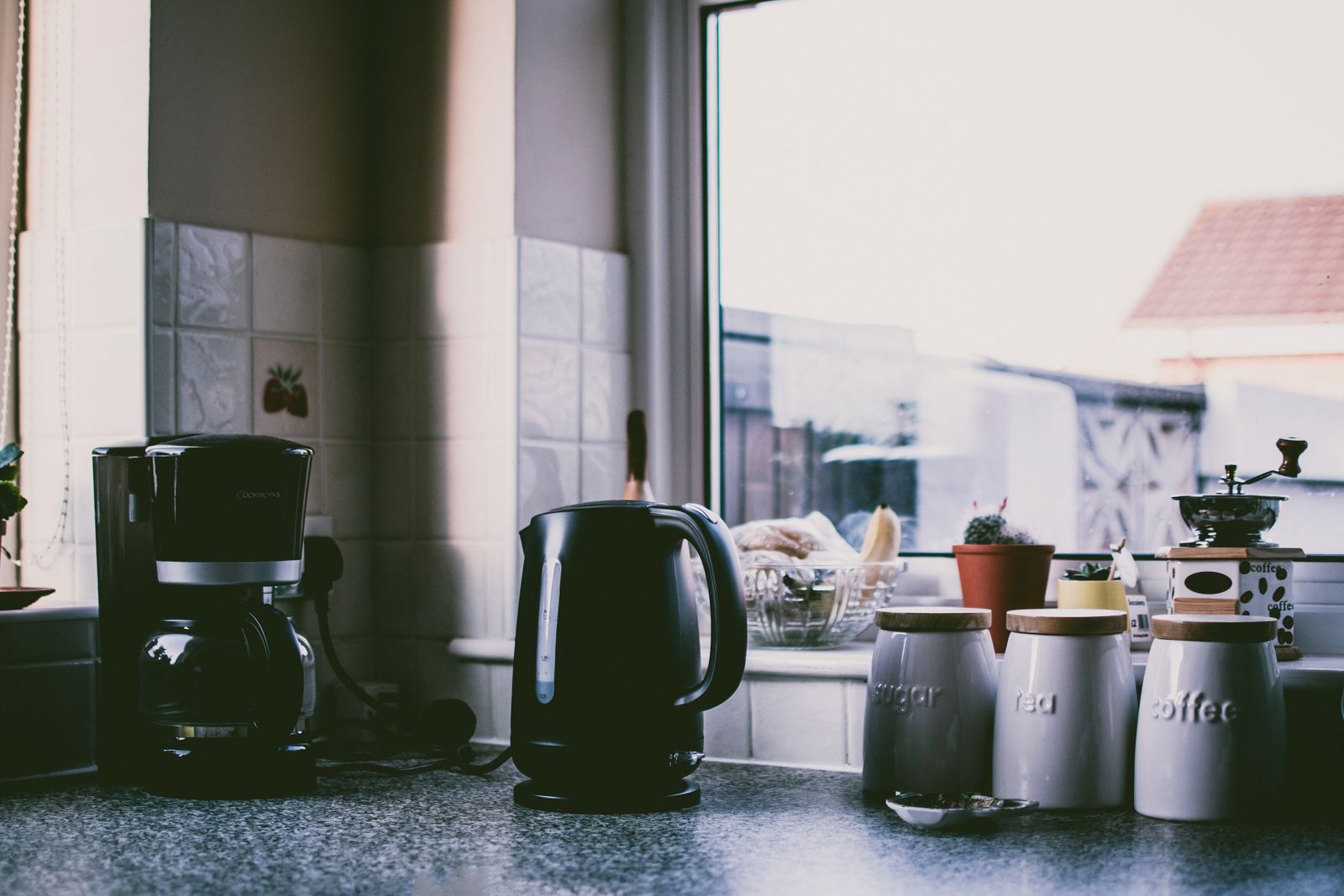
A coffee maker can earn its place on the counter before breakfast, while a waffle maker may sit beside it for weeks without being switched on. Both take up working space, but they do not need the same storage arrangement. Before buying another shelf or appliance cart, look at which machines you use, where you use them, and what it takes to put them away.
The useful question is whether an appliance deserves a permanent parking spot. A machine that makes cooking easier can stay within reach; one you keep moving out of the way needs a different home. This audit starts with the counter you already have.
Give each appliance a job and a frequency
Write down the appliances on your counter and the last time you used each one. Include the blender base behind the toaster and the food processor whose attachments live in another drawer. An honest record is more useful than a rule that says every kitchen should display the same two machines.
Sort the list into three groups: used most days, used for a recurring task, and used for a specific occasion. Your coffee maker might belong in the first group, a weekend mixer in the second, and a holiday waffle maker in the third. These groups are a starting point for testing locations, not a deadline for getting rid of things.
Keep the appliances that serve a regular routine near the place where that routine happens. Put the toaster where you can prepare breakfast without carrying bread and plates across the room. If two machines do the same job, decide whether both earn space before giving each a permanent spot.
Weight can matter more than frequency
A stand mixer you use once a week may deserve counter space more than a lightweight gadget used more often. If lifting the mixer is difficult, hiding it in a low cabinet can make baking harder. KitchenAid’s storage guide includes counter storage near the preparation area, upright storage in a lower cabinet, and lift systems as different options.
An existing cabinet works if the appliance fits and you can retrieve it without an awkward lift. A high shelf is a poor solution for a heavy machine that has to come down over your head. If you consider a pullout or lift, check its weight rating against the appliance before buying hardware; KitchenAid also advises planning clearance around an extended pullout.
Store the whole machine, not just its base
A food processor has not found a useful home if its bowl fits in one cupboard while the lid and working attachments disappear elsewhere. Set the complete kit together before choosing its space, using the manufacturer’s instructions for blades and other accessories.
Measure the opening, shelf depth, and height with the appliance assembled as it will be stored. Check whether the shelf can support it, and make sure you can close the door without pressing against a cord or handle. Follow the appliance’s care instructions before putting it away; a cabinet is a storage location, not permission to run a heat-producing machine inside it.
Test the arrangement before adding an organizer
Move one seldom-used appliance to its proposed location and cook through your normal routine. Notice whether you gained a usable preparation area or created a new obstacle every time you open a cupboard. If putting the appliance away is so awkward that it keeps returning to the counter, reconsider the location.
Once the machines have workable homes, tackle smaller items with the same approach. Our mug-storage idea offers one option for a coffee station, but an organizer should solve a specific problem rather than fill the space you just cleared.