

An old wasp nest hanging beneath the roof can become visible once autumn leaves fall. The gray paper structure may still look intact, even though the buzzing insects that occupied it during summer have disappeared. Removing the nest seems like a way to prevent another infestation next year, but the wasps responsible for starting new colonies may have left months earlier.
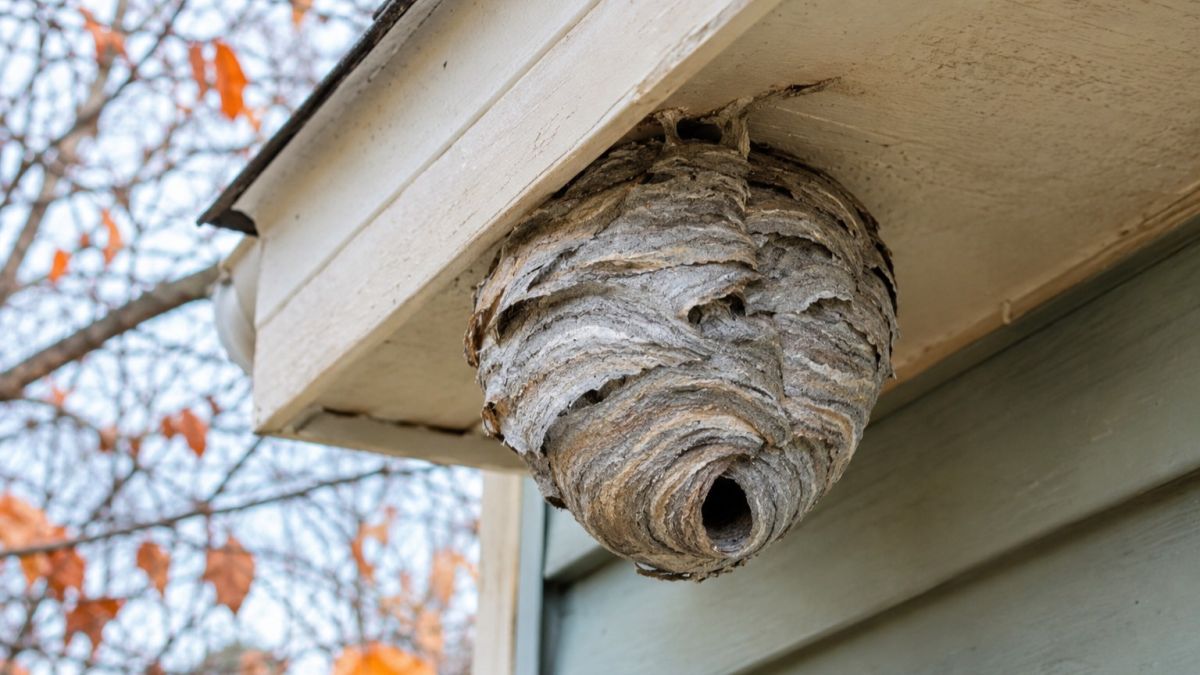
In many temperate social wasp species, most of the colony dies as temperatures drop and food becomes scarce. Workers, males, and the original queen don’t survive the winter. Newly mated queens are the exception, leaving the nest to find protected places where they can remain dormant until spring.
The abandoned nest doesn’t produce another colony the following year. Surviving queens establish new nests elsewhere, which explains why removing an old structure doesn’t prevent wasps from returning to the same property.
Most Wasps Die in Fall, but Fertilized Queens Survive
Social wasp colonies grow through spring and summer as workers gather food, expand the nest, and care for developing larvae.
Toward the end of the season, colonies produce new queens and males. After mating, the young queens leave to find winter shelter.
Falling temperatures and declining food supplies bring the remaining colony to an end.
The original queen, workers, and males die, leaving the paper nest abandoned. This annual cycle is common among yellowjackets and several other social wasps in temperate regions.
Newly mated queens survive by entering a dormant state called diapause, which reduces their activity and energy requirements.
They may shelter beneath loose tree bark, inside woodpiles, under roof materials, or within protected gaps around buildings.
A queen that spends winter inside an attic or wall void may become active during a warm spell. Finding a single wasp near an indoor window in January doesn’t necessarily mean an active colony is present.
However, repeated sightings or wasps entering and leaving the same opening warrant an inspection.
Why Removing the Nest Doesn’t Prevent Wasps From Returning
Most annual social wasp colonies don’t reuse their old paper nests. Once the colony dies, the structure remains empty and begins deteriorating.
A surviving queen emerges in spring and selects a location for a new nest. She builds the first paper cells, lays eggs, and raises the first generation of workers.
Those workers expand the colony as temperatures rise and food becomes available.
Removing an abandoned nest doesn’t affect queens already sheltering elsewhere, including beneath bark, inside sheds, or around roof openings.
Winter can provide an opportunity to inspect the exterior of a house for gaps that may allow wasps to enter.
Check damaged screens, openings around pipes, and gaps beneath roof edges. Seal suitable entry points after confirming no insects or other animals are using them, and avoid blocking required ventilation.
An old nest should never be assumed empty based on the calendar alone. Watch for activity from a safe distance before considering removal.
Nests inside walls, high beneath roofs, or in difficult locations are best assessed by a pest-control professional.
The annual colony cycle also varies by species and climate. Some wasp colonies can survive through winter in regions with mild temperatures.
Removing an abandoned nest clears away the old structure, but it doesn’t eliminate the fertilized queens that survived elsewhere. Those queens can start new colonies when spring arrives.
Sources: University of Minnesota Extension — Social Wasps, Penn State Extension — Yellowjackets, University of California Integrated Pest Management — Yellowjackets and Other Social Wasps

Leave a Reply