

An open glass jar filled with coarse white salt and dried lavender buds has become a homemade alternative to scented room products. The mixture is placed on bedroom nightstands, bathroom counters, and closet shelves, with claims that it absorbs moisture, removes odors, and keeps insects away. But the two ingredients don’t perform all those jobs.
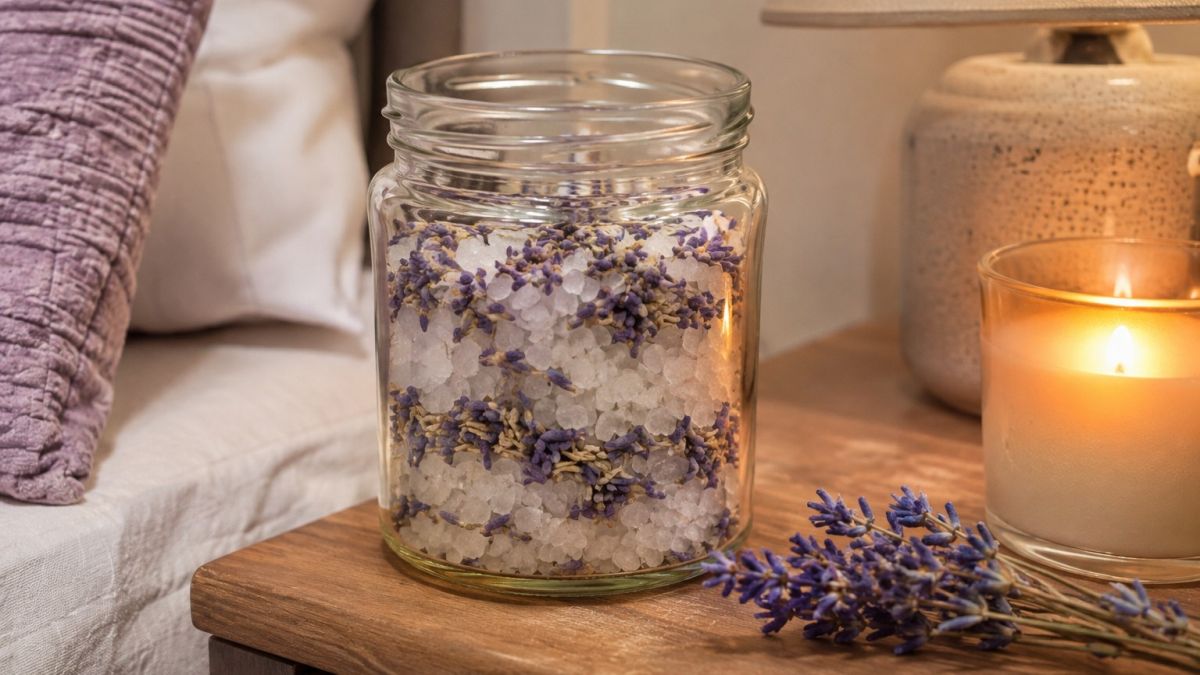
Dried lavender contains aromatic compounds, including linalool and linalyl acetate, that give the flowers their recognizable scent. Coarse salt can absorb moisture under certain conditions, although ordinary sodium chloride doesn’t draw much water from the air at typical indoor humidity levels.
The combination can serve as a scented decoration, but it won’t replace a dehumidifier, eliminate mold, or purify indoor air. Its main benefit comes from the fragrance released by the dried flowers.
Lavender Releases Fragrance, but Salt Doesn’t Absorb Much Room Humidity
Lavender flowers contain volatile compounds that evaporate into the surrounding air, producing their floral scent.
Dried buds retain some of these compounds after harvesting, although the fragrance fades as the aromatic substances escape.
Crushing or stirring the buds can release more scent by exposing additional plant material.
Coarse salt behaves differently. Sodium chloride is hygroscopic under sufficiently humid conditions, meaning it can absorb water vapor from the surrounding air.
At room temperature, ordinary salt begins taking up substantial atmospheric moisture at around 75% relative humidity.
Most homes should maintain indoor humidity well below that level. The Environmental Protection Agency recommends keeping relative humidity below 60%, with 30% to 50% preferred when possible.
At those conditions, an open jar of coarse salt won’t remove enough moisture to control dampness in a bedroom or bathroom.
The salt also doesn’t filter airborne pollutants or destroy odor-causing bacteria throughout a room.
Lavender may make a space smell more pleasant, but fragrance isn’t the same as removing the source of an odor.
Claims that the mixture prevents mold, repels household insects, or improves sleep haven’t been established for a jar containing dried lavender and coarse salt.
How to Make a Lavender and Coarse Salt Jar
For a small decorative jar, use:
- 1 cup coarse sea salt or rock salt
- ¼ to ½ cup dried lavender buds
- 1 clean, dry glass jar
Pour the coarse salt into the jar, leaving enough space for the lavender.
Add the dried buds and stir to distribute them through the crystals. The mixture can also be arranged in alternating layers if the jar will remain on display.
Leave the jar open in a dry location where the fragrance can escape.
A bedroom shelf, entryway console, or bathroom counter away from splashing water can work, provided the container cannot be knocked over.
Stir the mixture when the scent begins to fade. Crushing a few dried buds between your fingers can release more fragrance, although it won’t restore oils that have evaporated.
Avoid adding water, since damp lavender can deteriorate or develop mold.
Concentrated lavender essential oil isn’t necessary for the jar. Essential oils can also present risks to pets, so keep the mixture out of their reach.
If the salt becomes damp or the lavender develops an unpleasant odor, discard the contents and clean the container before refilling it.
For persistent indoor humidity, use a hygrometer to check moisture levels and address ventilation, leaks, or other sources of dampness.
Lavender gives the jar its scent, while coarse salt contributes little humidity control under normal indoor conditions. The mixture can freshen the smell of a small space, but it doesn’t remove mold, disinfect the air, or replace moisture-control equipment.
Sources: EPA — Mold and Moisture in Your Home, PubChem — Sodium Chloride, NCCIH — Lavender, ASPCA — Toxic and Non-Toxic Plants

Leave a Reply