

Most rustic kitchens are bright, but you can still add rustic charm to your non-white farmhouse kitchen without sticking to the usual color scheme. This guide shows you how to make a farmhouse kitchen using more natural wood and less white to feel more organic and connected to nature.

1. Plan and design the kitchen layout
Decide where everything will go, starting with the main items, like a sink and cooker. In this example, a double sink is installed in a corner to add a personal touch to the kitchen layout. Additionally, you gain more natural light from two windows, and you will have more room for everything else.
The cooker hood, responsible for removing cooking smells and steam, should be the centerpiece of your kitchen. It’s best to position it in the middle of your cooking area.

You’ll also need an island, provided your kitchen is big enough to support it. This free-standing piece of furniture takes center stage, and it’s quite useful for preparing food while entertaining guests. To save space, hang pots and pans above it.
For your dining area, think about adding faux wood beams above it to enhance the rustic farmhouse vibe – they look like real wooden beams but are lighter and easier to install. If you have space, a metal baker’s rack tucked in a corner serves as a stylish and practical storage solution.
2. Choose materials and colors
The dominant material for this non-white kitchen farmhouse design is natural wood. From cabinets to dining tables, wood adds a warm and earthy feel to the kitchen. When selecting the type of wood, consider the color, grain, and texture you like best for the overall look.
White remains a key component of this design but only as an accent color, such as white walls or specks of white in the marble countertops. This bright accent balances the richness of the wood and adds depth to your kitchen.
Make sure to introduce pops of color throughout your kitchen. For example, curtains made from a repurposed tablecloth with vibrant floral prints add a vintage touch that blends with the whole farmhouse look.
3. Install the range hood and light fixtures

After picking the layout, colors, and materials, you can install essential features. The range hood is the focal point of this kitchen design. Once you install it, you can make it more appealing by adding lights and decorating it with a lovely lemon wreath.
Apart from the range hood, ensure your kitchen has adequate lighting. Illuminate your workspace on the island, highlight your dishes on the baker’s rack, or accentuate the natural wood texture with strategically placed lights.
4. Organize your kitchen

The farmhouse style is all about practicality. For instance, hanging pots over the island frees up cabinet space and places cooking tools within easy reach. Meanwhile, the double sink in the corner makes it easier to wash dishes while staying out of the way of others.
The industrial baker’s rack offers plenty of space to store and display kitchen essentials or decorative items. Its open design fits the airy, spacious feel of the farmhouse kitchen style and allows easy access.
5. Incorporate decorative elements
With the basics set up, infuse your non-white farmhouse kitchen with personal touches. Here are some examples:
- Place a mini lemon tree in a red-painted terracotta pot to add a vibrant pop of color.
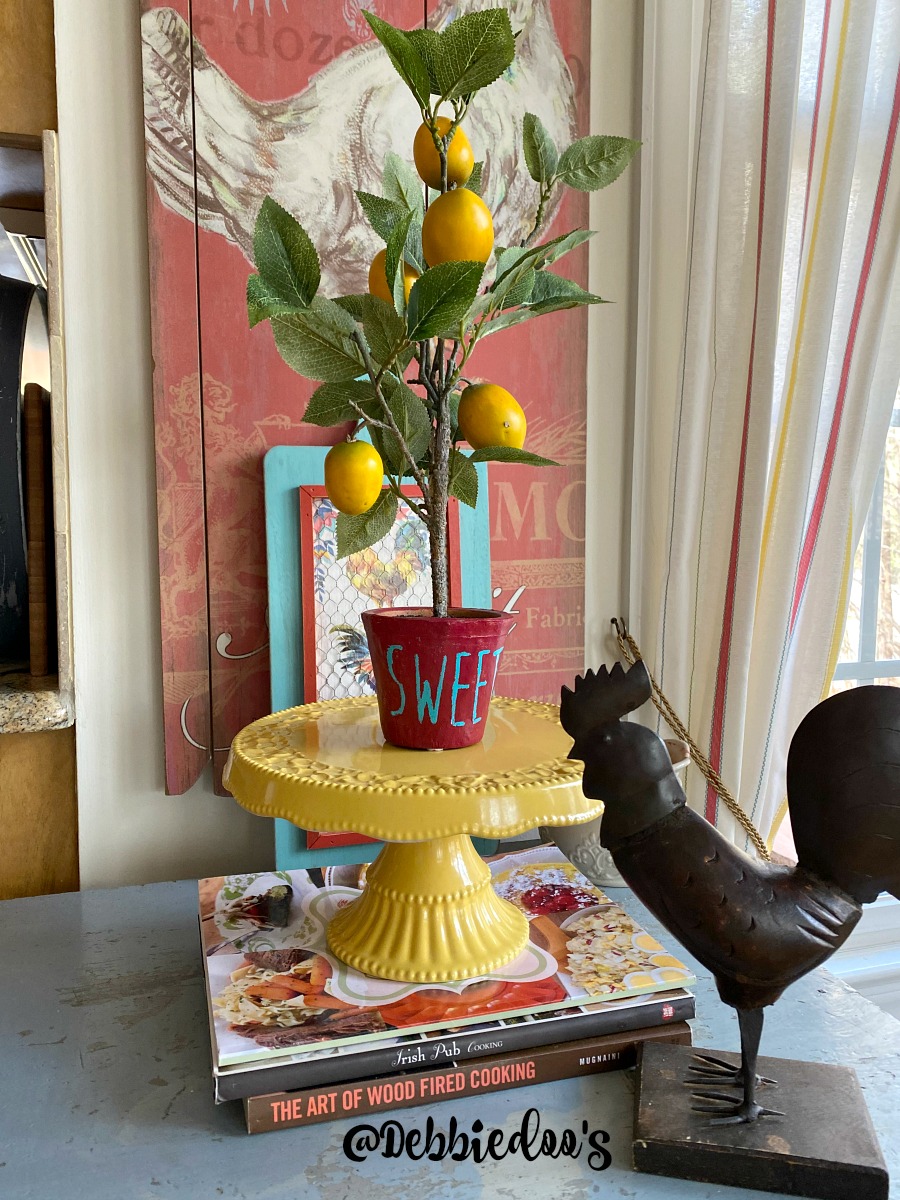
- Use Dollar Tree flower seed packs and mini terracotta pots to introduce a garden-like feel to the kitchen.

- Hang a repurposed window above the gas stove for a unique, vintage touch.

- Complement the whole design with colorful, floral-print curtains to provide a refreshing contrast to the natural wood.

- A distressed barn door is functional and stylish, thanks to its vintage look that contributes to the rustic feel of the space.


Leave a Reply