

Fresh-cut potatoes can turn brown in the frying pan without developing the crisp exterior expected from French fries. Their surfaces contain loose starch, and moisture left on the potatoes can interfere with browning. One preparation step involves soaking the cut pieces in cold water before they reach the hot oil.
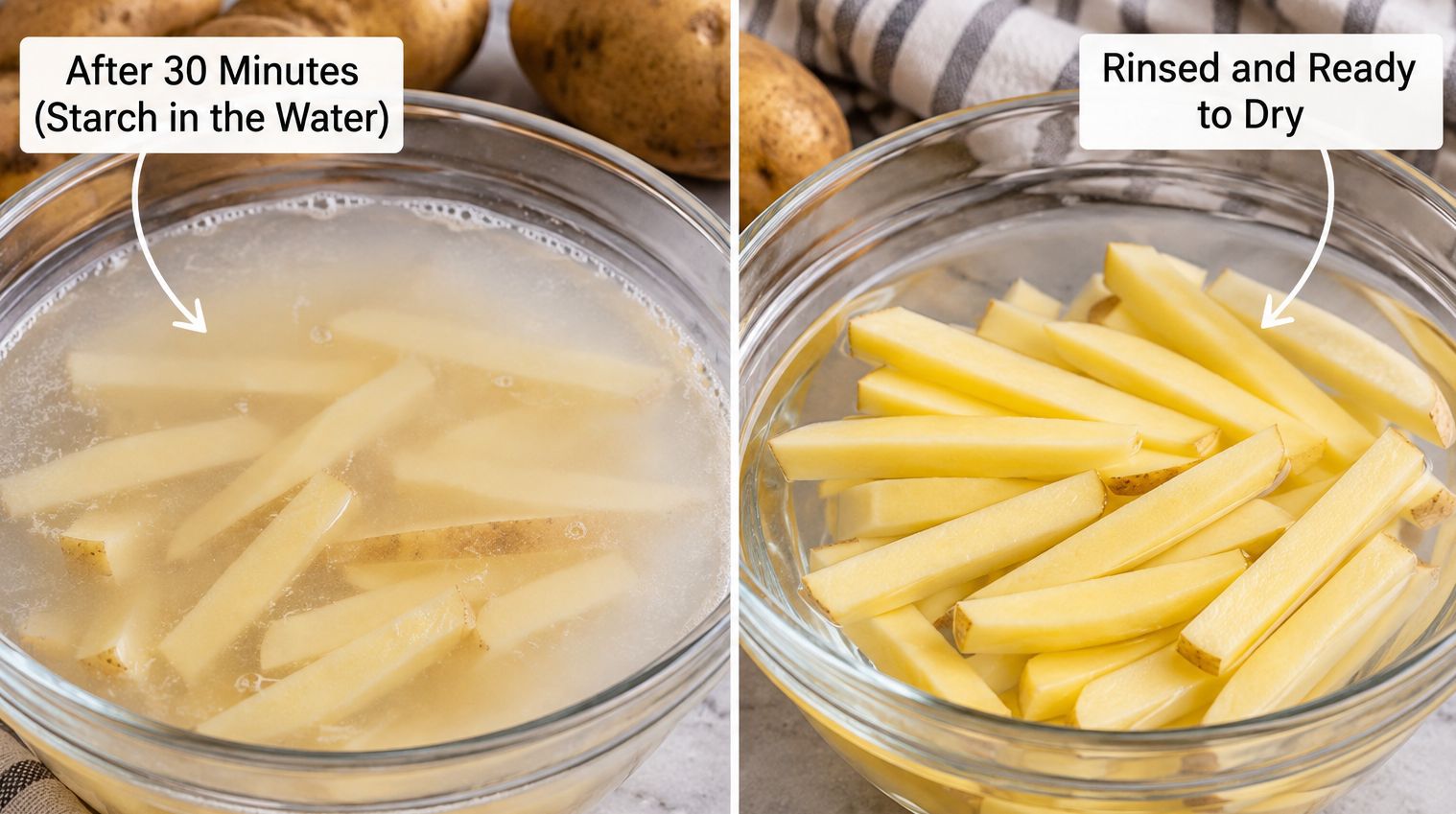
Cold water washes away some of the starch released when potatoes are sliced. The water may turn cloudy as starch particles separate from the cut surfaces, leaving less loose starch on the outside of each piece.
The method can help produce a more even crust, but soaking alone won’t make fries crisp. Removing the water afterward matters because excess surface moisture creates steam and interferes with frying.
Cold Water Removes Loose Starch From Cut Potatoes
Potatoes contain starch stored inside their cells. Cutting them into strips breaks some of those cells, releasing starch onto the exposed surfaces.
When the pieces sit in cold water, some of that loose starch disperses into the liquid.
The cloudy appearance of the soaking water comes in part from starch particles suspended in it.
Removing excess surface starch can reduce the tendency of potato strips to stick together during frying and help the exterior cook more evenly.
However, starch isn’t the enemy of crisp fries. Starch within the potato contributes to crust formation as the surface heats and loses moisture.
The purpose of soaking is to remove some loose starch from the cut surfaces, not strip the potato of all its starch.
Cold water also limits discoloration while the cut potatoes wait to be cooked.
How to Soak Potatoes Before Frying
For homemade French fries, start with starchy potatoes such as russets.
Wash the potatoes and cut them into strips of similar thickness so they cook at the same rate.
Place the pieces in a bowl and cover them with cold water.
Let them soak for 30 minutes, then drain. For longer soaking periods, keep the potatoes refrigerated.
If the water has become cloudy, rinse the potatoes under fresh cold water to remove remaining loose starch.
Spread the strips across a clean kitchen towel or paper towels and pat them dry.
Pay attention to the spaces between pieces, where water can remain trapped after draining.
Drying is essential before frying. Water entering hot oil can cause splattering, while moisture on the potato surface must evaporate before a crisp crust can develop.
For a crisp exterior and tender center, use a two-stage frying method.
Cook the potatoes first at approximately 325°F (163°C) until tender but not browned. Remove them from the oil and allow excess oil and steam to escape.
Increase the oil temperature to approximately 375°F (190°C), then fry the potatoes again until golden.
Work in small batches to prevent the oil temperature from dropping too far.
Drain the finished fries on a wire rack and season with salt while hot.
The finished texture depends on potato variety, strip thickness, oil temperature, and moisture removal.
Cold-water soaking removes some loose surface starch, but drying and controlled frying temperatures are what help turn the exterior into a crisp crust.
Sources: Idaho Potato Commission, Serious Eats — Perfect Thin and Crispy French Fries, USDA — Potatoes and Food Safety
Leave a Reply