

Pork chops can develop a golden crust in the frying pan and still turn out dry when cut open. Lean cuts contain little fat to protect them from moisture loss, and cooking them for too long can leave the meat firm and chewy. One preparation method addresses that problem before the chops reach the heat.
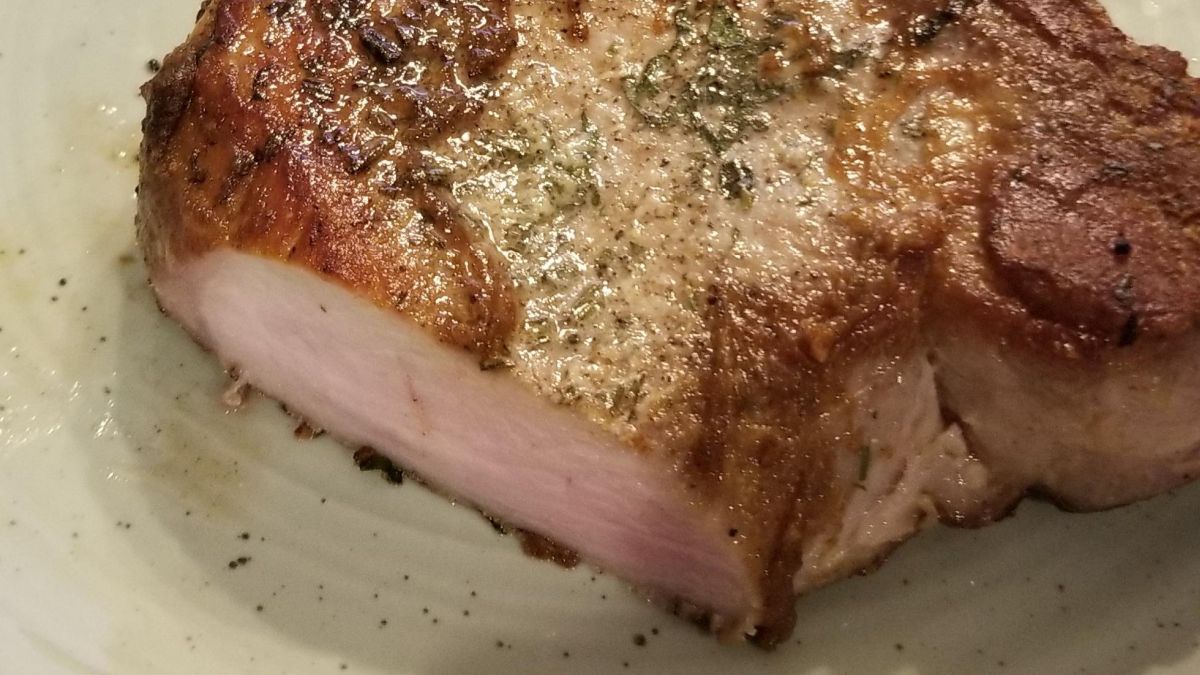
Soaking pork chops in salt water, a technique called brining, changes how the meat’s proteins interact with moisture. Salt moves into the outer layers of the pork and helps the muscle retain more water during cooking.
The method requires salt, water, and time in the refrigerator. A short brine can improve seasoning and moisture retention, although it won’t prevent dryness if the chops are overcooked.
Salt Water Changes How Pork Chops Hold Moisture
Pork muscle contains proteins that contract as the meat heats, forcing some moisture out during cooking.
Salt dissolved in water moves into the meat and affects those proteins, allowing them to retain more moisture as temperatures rise.
This helps explain why brined pork chops can remain juicier than untreated chops cooked under the same conditions.
The salt also seasons the meat beneath its surface rather than leaving all the seasoning on the outside.
Sugar is sometimes added to brine to balance the salt and contribute to browning, but it isn’t required for the moisture-retention effect.
Brining doesn’t add fat or make pork immune to overcooking. Its benefit comes from changing how the meat responds to heat.
How to Brine Pork Chops Before Cooking
For four pork chops about one inch thick, the recipe uses:
- 700 ml water
- 70 g kosher salt
- 50 g brown sugar
- 2 garlic cloves
Pour about 240 ml of the water into a saucepan, add the salt and brown sugar, and heat until dissolved.
Remove the saucepan from the heat, then add the remaining cold water and garlic. Allow the brine to cool before it touches the raw meat.
Place the pork chops in a shallow dish and pour the cooled brine over them until submerged.
Cover and refrigerate for 30 minutes to one hour. The mixture contains a substantial amount of salt, so leaving the chops submerged for too long can make them taste oversalted.
Remove the pork from the brine and pat each chop dry with paper towels. Drying the surface helps the meat develop a browned crust in the skillet.
Heat olive oil in a frying pan and sear the chops for about three minutes on the first side, then turn them over.
Finish cooking in an oven preheated to 200°C (392°F), checking the internal temperature rather than relying on a fixed cooking time.
Whole pork chops should reach 145°F (63°C) at the thickest point, followed by a three-minute rest before serving.
Discard the used brine and avoid adding much extra salt before cooking, since the pork has absorbed seasoning during soaking.
The preparation takes only a few minutes, but the brining period requires additional time in the refrigerator.
Salt water helps pork retain moisture by changing how its proteins behave during cooking. The result can be a juicier chop, provided the meat isn’t cooked past its recommended temperature..


Leave a Reply