

Gas water heaters can stop producing hot water when their pilot lights go out. Relighting the flame may seem like the first step, but a pilot that keeps shutting off can signal a problem elsewhere in the appliance. When the failure follows damage to the exhaust vent, the issue deserves more attention than another ignition attempt.
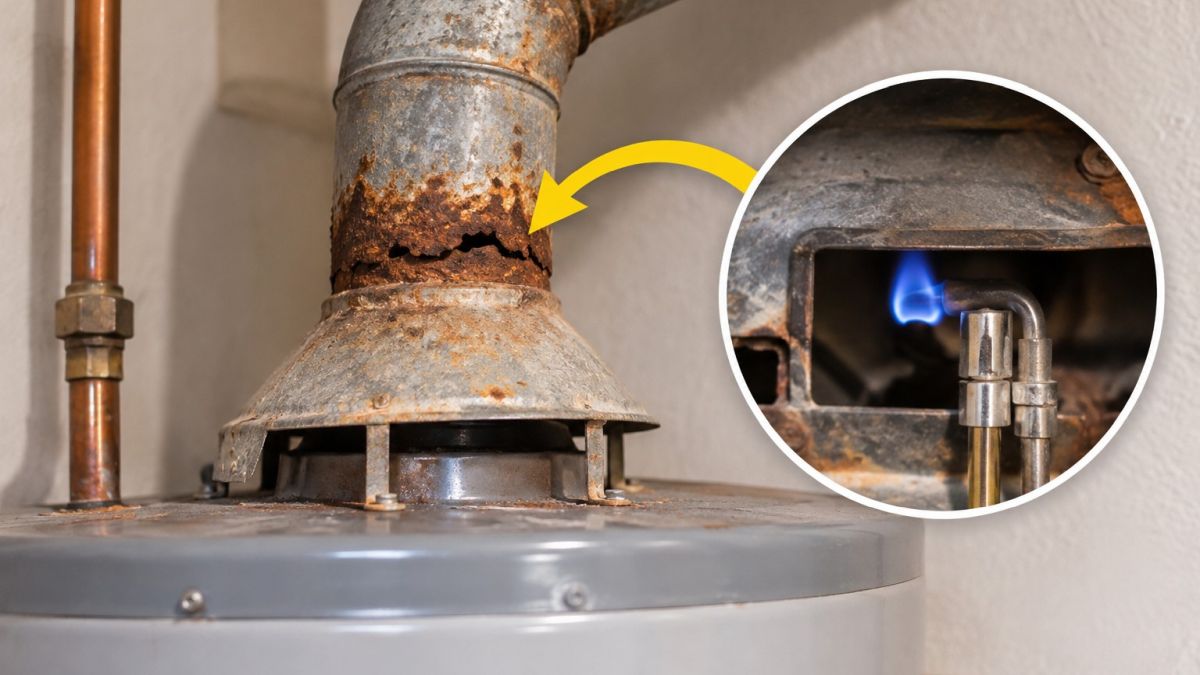
One homeowner described an eight-year-old gas water heater that developed problems after a rusted flue required repair. The water became too hot after the vent work, and the pilot light later stopped staying lit. A technician recommended replacing the heater after identifying a faulty temperature control.
The replacement recommendation raised questions in an online plumbing discussion. Commenters wanted to know whether the damaged vent had been inspected from the burner to the roof and whether debris had reached the combustion components. The account doesn’t establish what caused the failure, but it highlights an important distinction between an ignition problem and a potentially unsafe exhaust system.
A Pilot Light Can Go Out for Reasons Beyond Ignition
Gas water heaters use a pilot flame or electronic ignition system to ignite the main burner.
On models with standing pilots, a thermocouple or other flame-sensing device helps prevent gas from flowing when the flame goes out.
A pilot that won’t remain lit can indicate a faulty flame sensor, gas control, restricted combustion air, or another component problem.
Some water heaters also contain safety devices that shut down the burner when abnormal operating conditions are detected.
The homeowner’s report included another symptom: water became excessively hot after the flue repair.
A malfunctioning thermostat or gas control can affect water temperature, but the available information doesn’t establish whether that problem caused the pilot failure.
The technician estimated replacement parts at around $300 before labor and recommended purchasing a new heater.
At eight years old, the appliance’s age alone doesn’t prove replacement is necessary. Its condition, repair costs, and safety determine whether continued service makes sense.
A Rusted Flue Raises a Separate Safety Concern
A gas water heater produces combustion gases that must travel through its venting system to the outdoors.
The flue carries those gases away from the appliance. Corrosion, damaged connections, or blocked passages can interfere with proper venting.
When exhaust gases enter living spaces instead of leaving the building, occupants may be exposed to carbon monoxide, a gas that cannot be seen or smelled.
In the homeowner’s case, one commenter questioned whether debris from the rusted vent had entered the burner assembly or air intake.
Another recommended inspecting the entire exhaust path, from the burner area to the roof vent cap, before concluding that the heater needed replacement.
The homeowner reported that the technician had cleaned the vent, but the discussion didn’t confirm the results of a complete venting and combustion inspection.
Replacing a water heater doesn’t repair a damaged venting system unless that system is also addressed.
A qualified gas-appliance technician should inspect the flue, vent connections, combustion air supply, and relevant safety controls before returning an appliance with suspected vent damage to service.
Homeowners shouldn’t attempt to relight or operate a gas water heater with a damaged or questionable exhaust vent.
If a carbon monoxide alarm sounds or occupants develop symptoms such as headache, dizziness, or nausea that may indicate exposure, leave the building and contact emergency services.
A pilot light that repeatedly goes out requires diagnosis rather than repeated relighting.
The pilot may be the visible symptom, but the rusted flue creates a separate safety question. Before deciding whether to repair or replace the heater, the exhaust system and combustion components need professional inspection.
Sources: Original homeowner discussion — Reddit, CDC — Carbon Monoxide Poisoning, U.S. Department of Energy — Water Heating



Leave a Reply