
A blanket of suds can hide the water under it. Move the bubbles aside after washing a greasy pan and look at what’s floating below. If the water is full of food scraps or a film of fat, drain it, rinse the basin, and start again before working through the rest of the dishes.
Scrape first and wash the least greasy items first
Scrape leftover food into the trash or compost where appropriate before plates reach the sink. Set greasy cookware aside and start with glasses and less soiled dishes. That gives each item a cleaner wash and leaves the pans for the point when you were going to change the water anyway.
Use a hand-dishwashing product according to its label. Adding another squeeze when the water looks gray puts more detergent into the same dirty basin. A fresh bowl of wash water gives you a better starting point. Rinse dishes with clean water and put them on a rack where air can reach the surfaces.
Check the tools waiting beside the sink
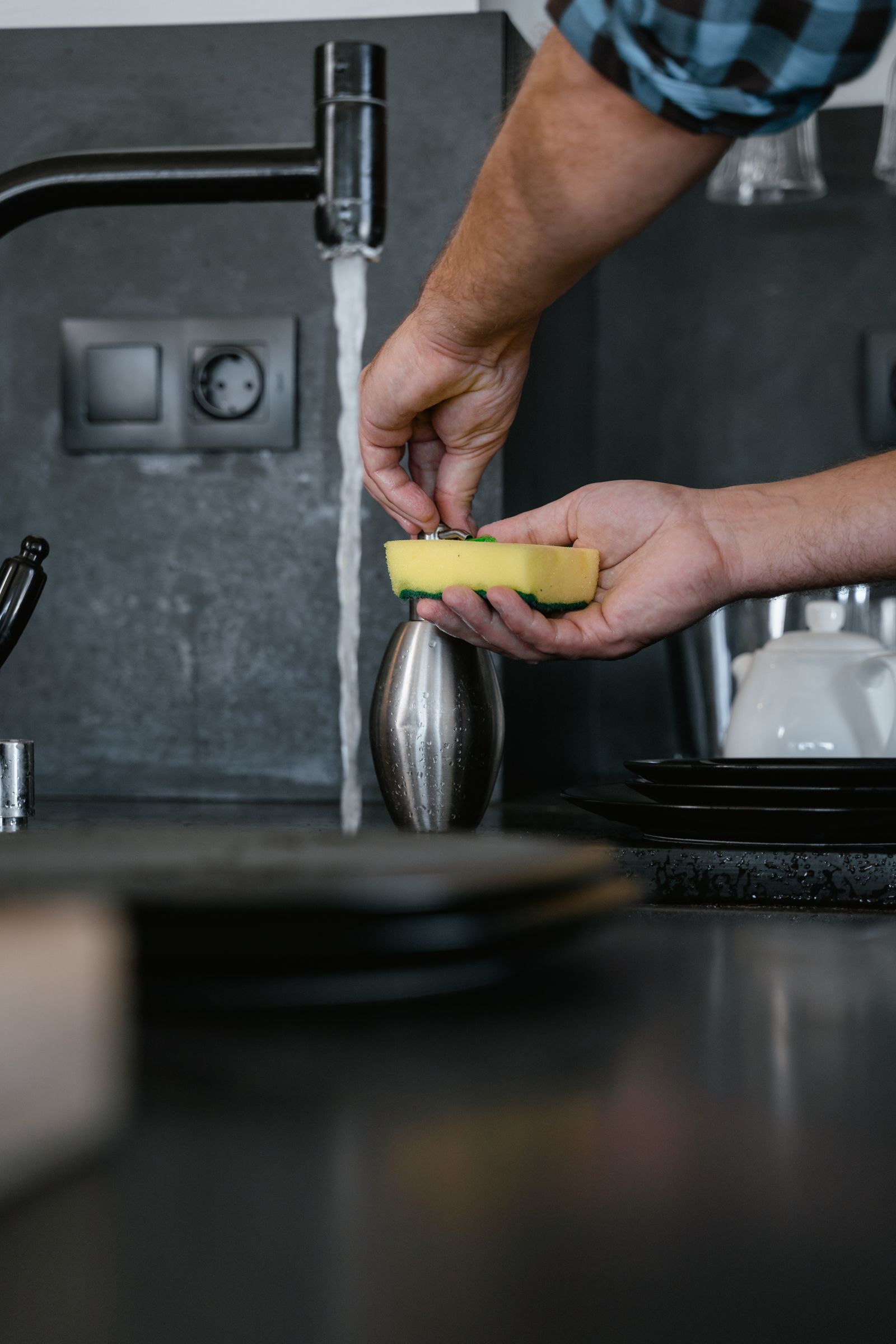
Rinse food particles from your brush or sponge during the job. A tool loaded with sauce can put that residue straight onto the next glass. If the sponge is breaking apart or the brush still holds food after rinsing, replace or clean it according to its care instructions. Keep tools used for raw-meat cleanup separate from the one used for everyday dishes.
Finish by clearing the strainer, washing the basin, and leaving the cleaning tool somewhere it can drain. If you use a wash tub, lift it out and check the sink underneath. A little water often stays there, carrying the bits that escaped over the edge. Drying that space makes it easier to spot a fresh spill the next time you start washing.

Leave a Reply