

The microwave got the headline in a federal lab test of kitchen sponges, but the dishwasher did well too. A full cycle with heated drying was one of the two most effective methods in the experiment. If your sponge is dishwasher-safe, that gives you a way to treat it as part of a load you were going to run anyway.
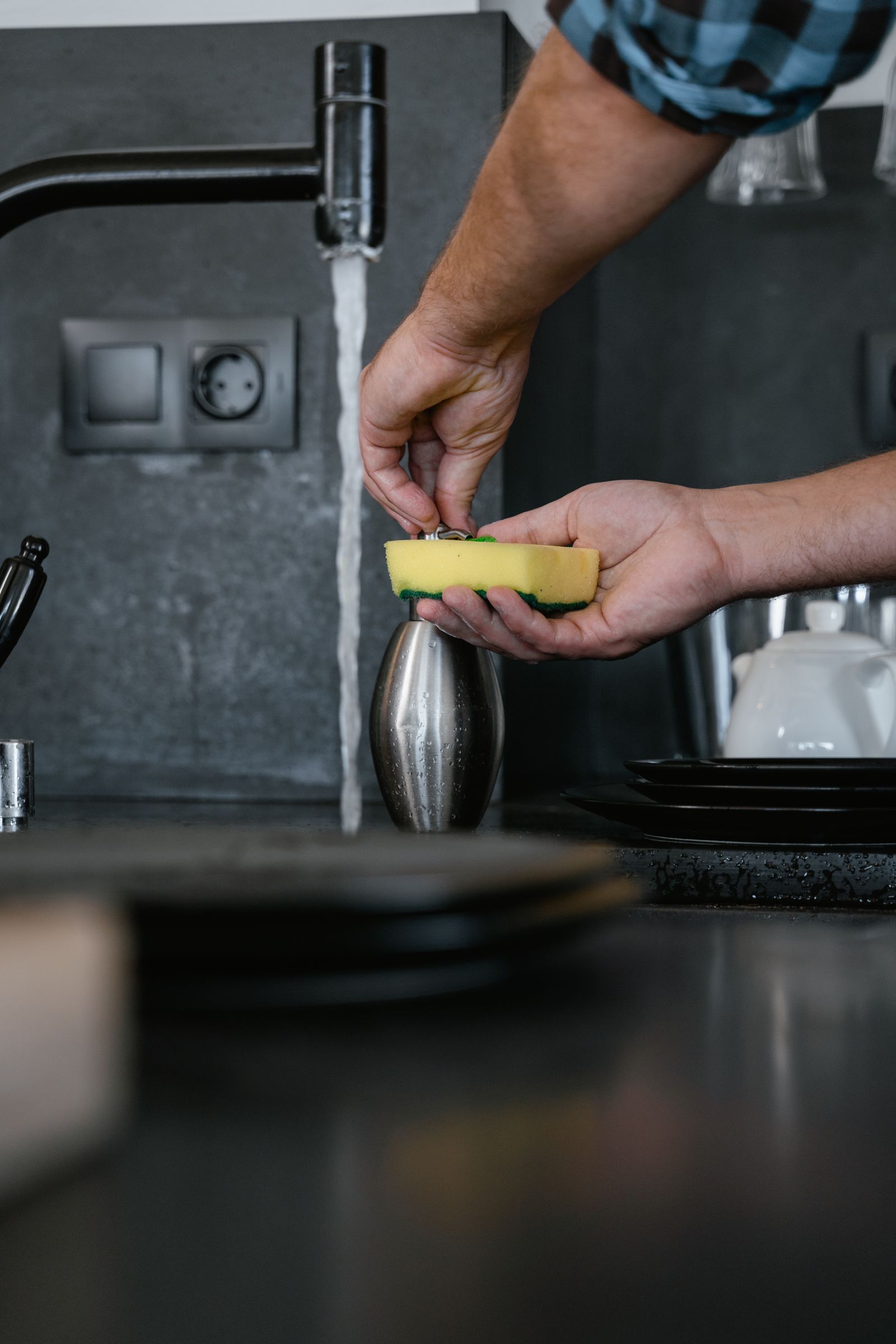
What the lab put up against the microwave
Researchers at the USDA Agricultural Research Service compared several treatments on sponges they had exposed to a mixture meant to mimic kitchen contamination. They tested a one-minute microwave treatment, a dishwasher cycle with drying, and short soaks in diluted bleach, lemon juice, or deionized water. The microwave and the dishwasher performed best on the bacteria, yeasts, and molds the researchers measured.
That list matters if your habit is to soak the sponge in vinegar. Vinegar was outside the comparison, so the experiment gives no head-to-head result for that soak. It also used set conditions. The outcome gives you a reason to consider a compatible dishwasher cycle, with no promise that every sponge or appliance setting will give the same result.
Check the sponge before choosing a cycle
Read the label. If the manufacturer marks the sponge dishwasher-safe, put it where it can stay secure and use a cycle that includes drying. A quick rinse cycle skips part of what the team tested. If you were thinking about the microwave, the one-minute test is a lab detail, not a timing guide for an unknown pad, a dry sponge, or one with metal components.
Keep a separate tool for spills from raw meat. A dishwasher run after dinner can’t undo what the sponge touched while you were cooking. Replace it when it starts to break down, and let the next one dry between uses instead of leaving it in a puddle by the sink.


Leave a Reply