

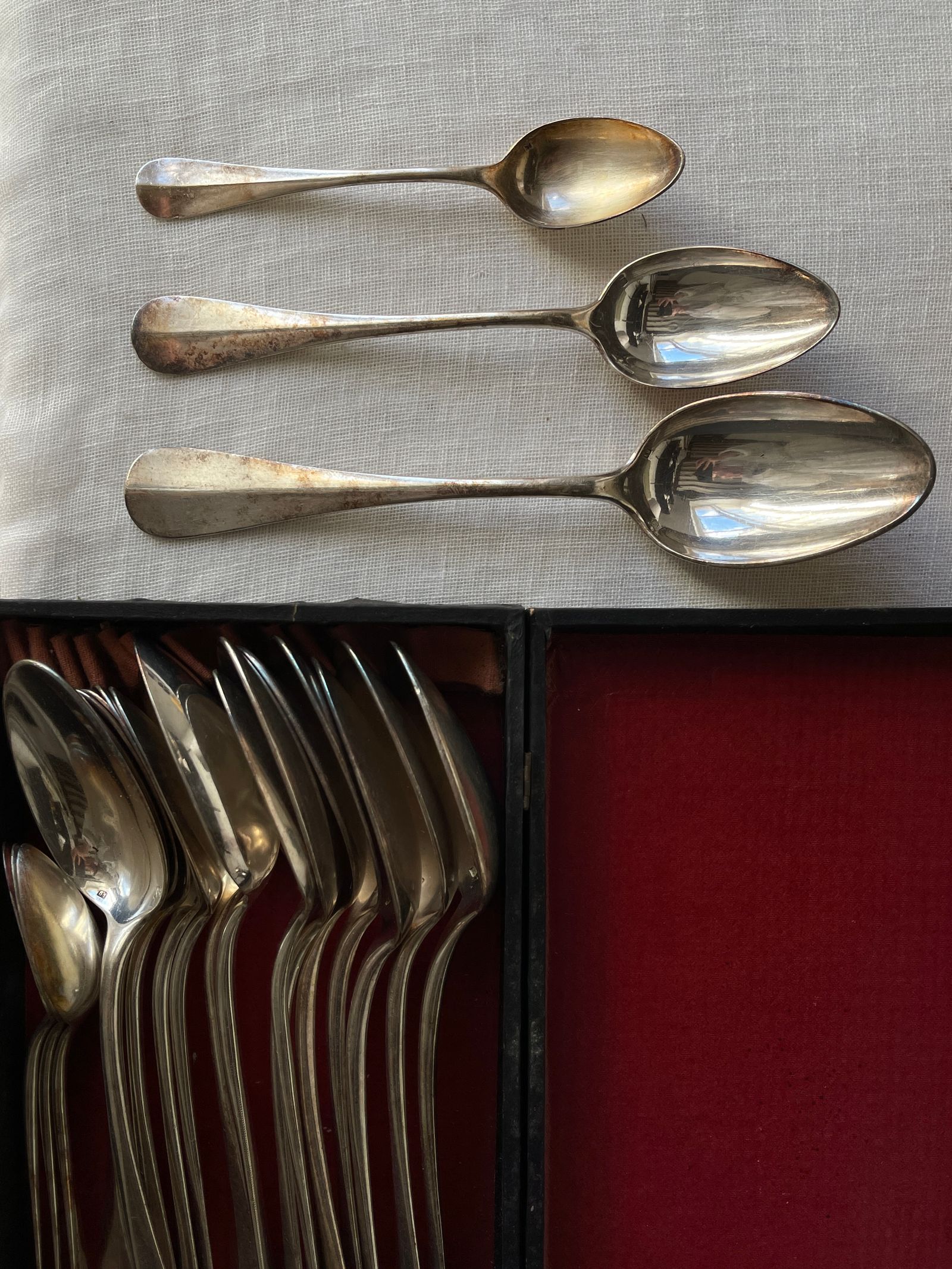
A darkened silver spoon can make the foil-bath trick look tempting before a holiday dinner. Turn it over first. A plain metal spoon and a knife with a filled handle can need different care, even when they came from the same set. The construction of the piece matters as much as the tarnish you can see.
Look at what would go into the water
Check for glued parts, hollow handles, stones, and dark decorative details. An immersion treatment can reach joints that a polishing cloth stays clear of. A blackened pattern may also be part of the intended finish. If you want to keep that contrast, removing tarnish from every recess could change the look you like.
The Canadian Conservation Institute explains that silver tarnish forms through reactions with sulfur-containing substances. An aluminum treatment changes that surface chemistry. It offers no guarantee that a treasured piece’s joins, plating, or decorative finish can tolerate a soak. For an antique or an item with unknown construction, ask a conservator or specialist before trying it.
Clean one piece before committing the set
Follow the maker’s care directions. If they call for a silver polish, apply it with a soft cloth and light pressure, keeping away from decorations or joins that need special care. Rinse and dry as directed. Work on one piece so you can see the result before taking the rest out of storage.
When the pieces are ready for the table, dry them before putting them away. Store each item so it won’t rub against the next, and use storage materials intended for silver. If the set includes mixed handles or plated pieces, keep a note of their care requirements with it. That saves you from making the same inspection in a rush before the next family meal.

Leave a Reply