

The room smells stale, and the curtains are within reach of a spray bottle. First, look inside the lowest folds. Dust, pet hair, and lint can collect where the fabric brushes the floor. Removing that material gives you a useful first job before you decide whether the panels need a wash or professional cleaning.
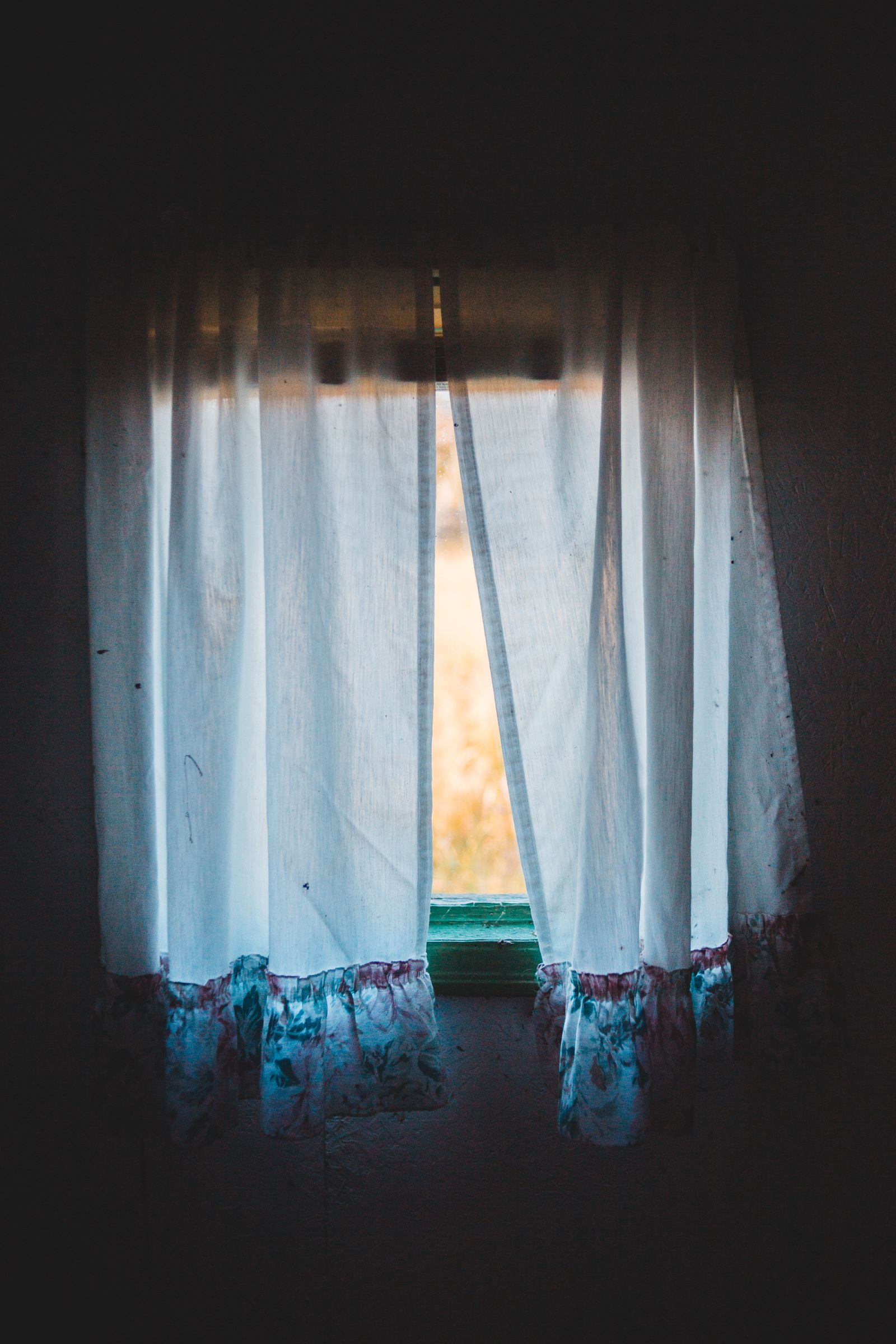
Find the care label while the panels are hanging
Check a side seam or the top of the panel for washing instructions. Look at the lining as well as the face fabric: a curtain can contain materials that need different treatment. Keep the instructions with a photo of the panel so you have them when it’s time to take the curtains down. If the label calls for professional cleaning, follow that route rather than adding a homemade spray.
For curtains whose care instructions allow vacuuming, start with a clean upholstery attachment and low suction. Support the fabric with one hand and work down the folds, giving the hem a separate pass. Stop if the vacuum pulls at a loose thread, trim, or fragile lining. Clean the windowsill and floor below afterward so dust that falls during the job gets picked up too.
Look for the source of the smell
A panel next to a cooking area may need a different approach from one hanging beside a damp window. Check the sill, the wall behind the fabric, and any place where the hem stays wet. If moisture keeps returning, address it before rehanging clean curtains. A fragrance added to the fabric gives you little information about what’s causing the odor.
If the label permits washing, use the temperature and drying method it specifies. Take down hooks and other removable hardware first, and keep each panel’s fittings together. Before rehanging, clean the rod and brackets. Leave enough clearance at the hem for the fabric to stay off a damp floor, and check the folds again during your next room cleanup.
Leave a Reply