
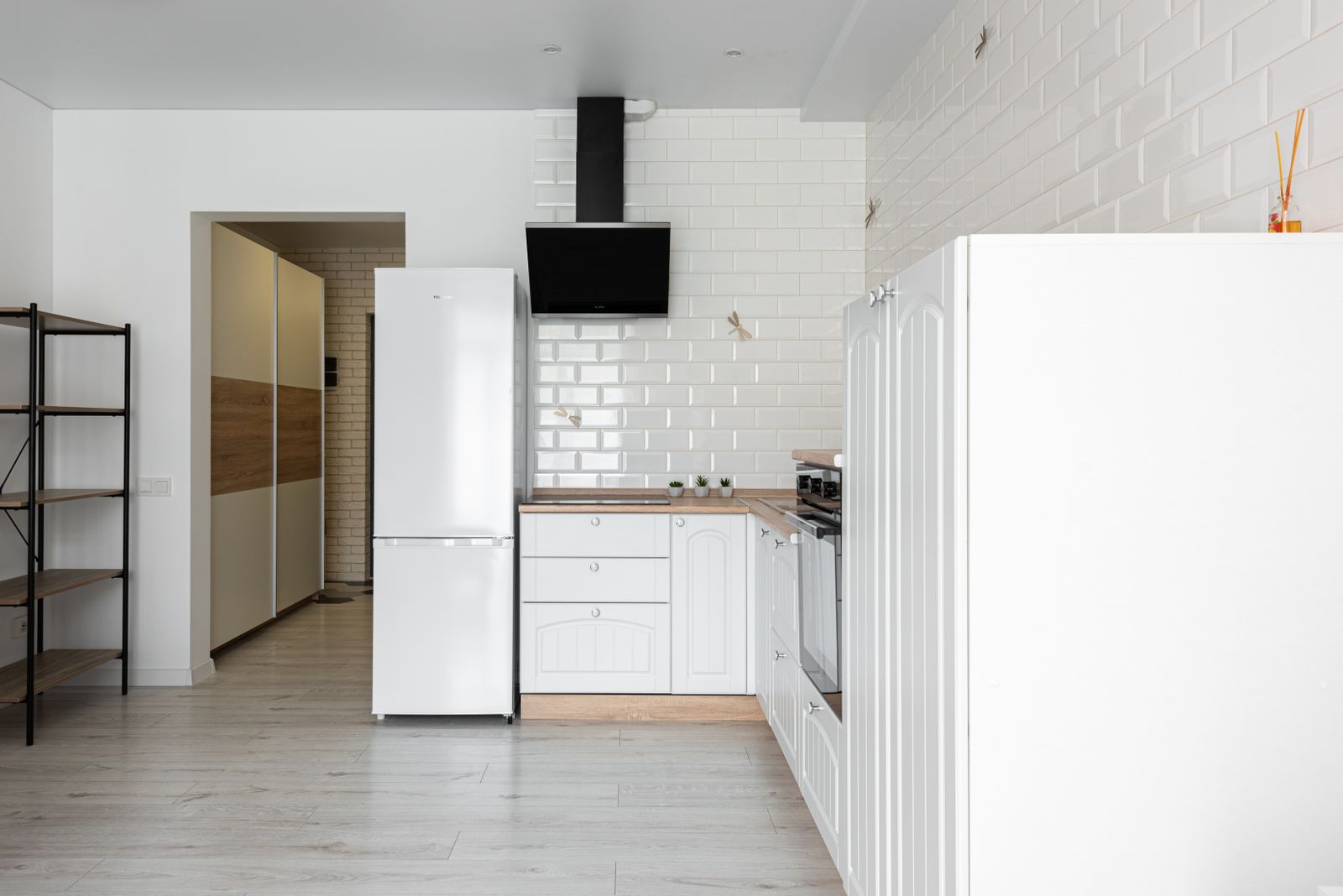
The cupboard above the refrigerator often holds the things nobody wants to deal with: a serving platter, an appliance box, and a stack of trays that will not stand upright elsewhere. Its height makes it awkward for everyday storage, but that does not make the space useless. The better question is which objects can move there without making them a chore to retrieve.
Start with the shelf you wish you could clear at waist height. Holiday napkins or spare placemats may be occupying a place that would serve your lunch containers much better. Moving a few light, infrequent-use items can free that shelf without changing the cabinets.
A large empty cupboard can tempt you to store the stand mixer there because it fits. Think through the return trip before you do: you would have to lift the appliance down, use it, and raise it above shoulder level again. A cabinet’s capacity and your ability to handle an object are different limits.
Try lightweight kitchen linens, spare cloth napkins, or a small set of seasonal accessories instead. Keep objects with similar uses together so you can retrieve one group rather than search across the shelf. Leave heavy cookware and machines in a location where you can lift them with control.
Make the back of the cupboard accountable
Measure the door opening and the usable shelf depth before choosing a basket. An attractive bin that fits the shelf but cannot pass through the opening has not solved the problem. Use a container you can lift when filled, with a front label you can read from the floor.
Write down what belongs inside, when a deep cabinet hides a second row. A label such as “holiday napkins and runners” provides a destination; “miscellaneous” lets the same pile rebuild behind a door. Store each set together rather than filling every remaining gap with an unrelated item.
Keep the refrigerator’s installation space clear
The enclosed cupboard and the gap around the refrigerator are not interchangeable storage areas. GE Appliances explains that refrigerators need model-specific air clearances. Check your appliance’s installation instructions and preserve the required space and vents instead of pushing baskets or towels into gaps.
Use a stable step stool when needed, never the refrigerator shelves, a chair with wheels, or an open appliance door. If reaching the cupboard remains awkward, reserve it for a smaller number of light items rather than forcing it into your everyday routine.
After moving those items, give the available shelf a defined purpose. Our countertop appliance audit can help you decide whether that accessible cabinet space would be better used by a blender or another machine that now blocks your preparation area.