
The middle of an old curtain panel may be in better shape than its sun-faded edge or worn heading. That usable fabric can become a table runner, provided you inspect it before cutting. A narrow strip does not need enough material for another pair of curtains, which makes this a useful project for a panel that no longer fits a window.
Homemaking includes table runners among its ideas for reusing curtains and sheets. The approach below uses basic measuring and hemming so you can adapt the size to your table rather than follow a fixed set of dimensions. The photograph is illustrative, not a before-and-after of a project made here.
Inspect the fabric you would be putting on the table
Read the care label and check both sides of the panel for stains, odors, brittle areas, or a deteriorating backing. Choose a clean, washable fabric that suits the intended use. Leave behind blackout material or treated fabric whose composition and care you cannot establish.
Wash or clean the usable panel according to its label before measuring, so any permitted laundering happens before you decide the finished size. Press it with the appropriate heat if allowed, then lay it flat. Keep the piece away from food-contact use; this project makes a decorative textile, not a food-safe preparation surface.
Plan the runner on the table itself
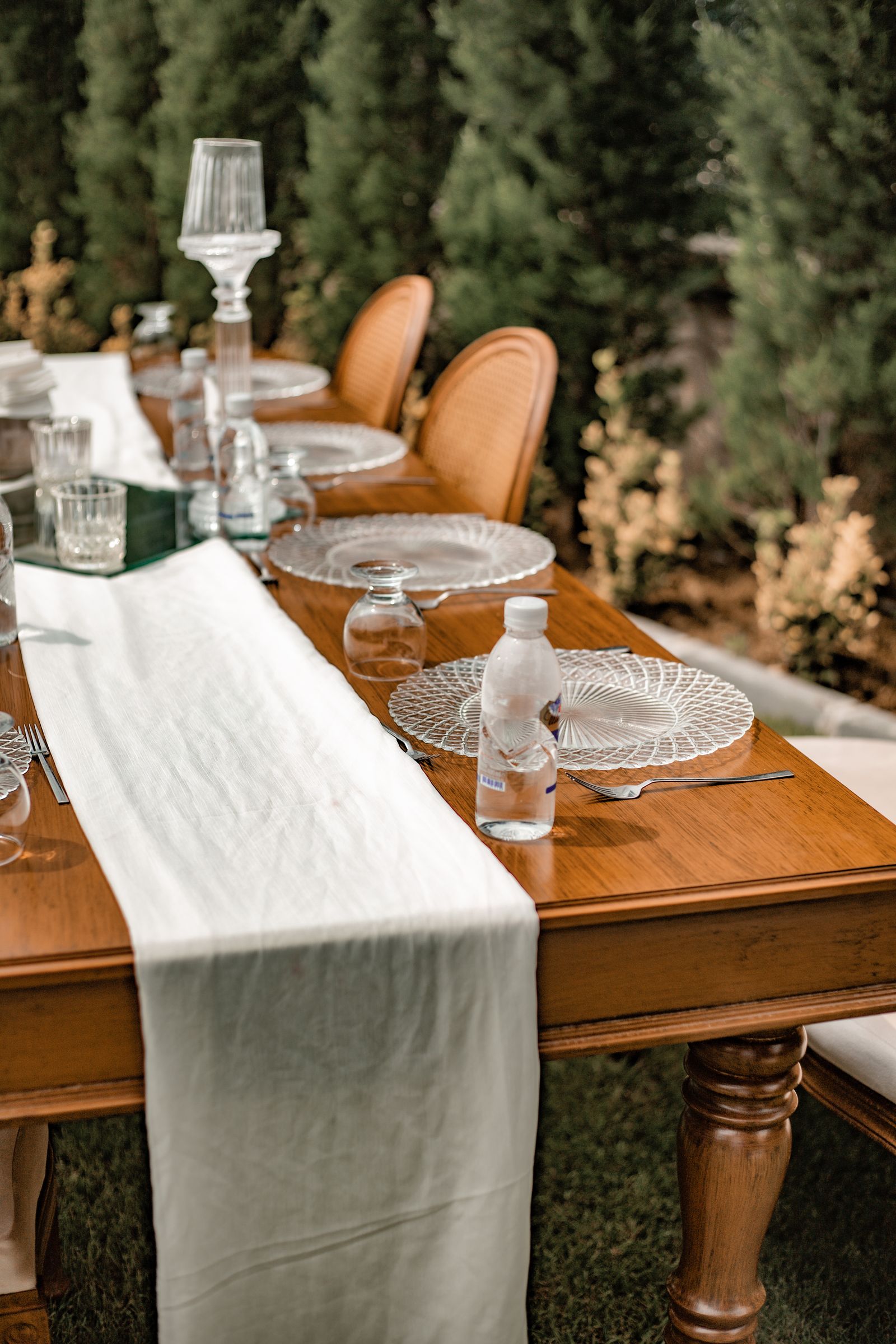
Use a folded piece of paper or another cloth to test the width and length. See how it sits with your place settings and whether you want an overhang or a runner contained within the tabletop. Check where chair backs and moving dishes will meet the fabric.
Once the finished dimensions work, add enough material around the edges for your chosen hem. Mark the cut lines on the curtain, avoiding the damaged areas and checking the direction of the pattern. An existing straight hem may be worth retaining if it fits the plan.
Finish the edges for the way you will wash it
For a sewn finish, fold each raw edge under, press as permitted, fold again to enclose it, and stitch with thread and needle suited to the fabric. Test the stitch on a scrap first. If you prefer fusible hemming tape, check its compatibility with the textile, iron temperature, and washing method before committing.
Lay the finished runner on the bare table and check that the corners sit flat. Use separate trivets for hot cookware and keep fabric clear of flames. Folding and laundering instructions for the original panel still matter after it becomes a smaller textile.
If you have more usable fabric than this project needs, our no-sew curtain-trim project offers another way to rethink an existing panel before buying new material.