
Fabric scraps are often too small for another pillow but large enough to cover a pincushion. Pair one with a shallow, empty tuna can and you have the makings of a compact holder for a sewing table: a padded dome for the pins and a metal base underneath.
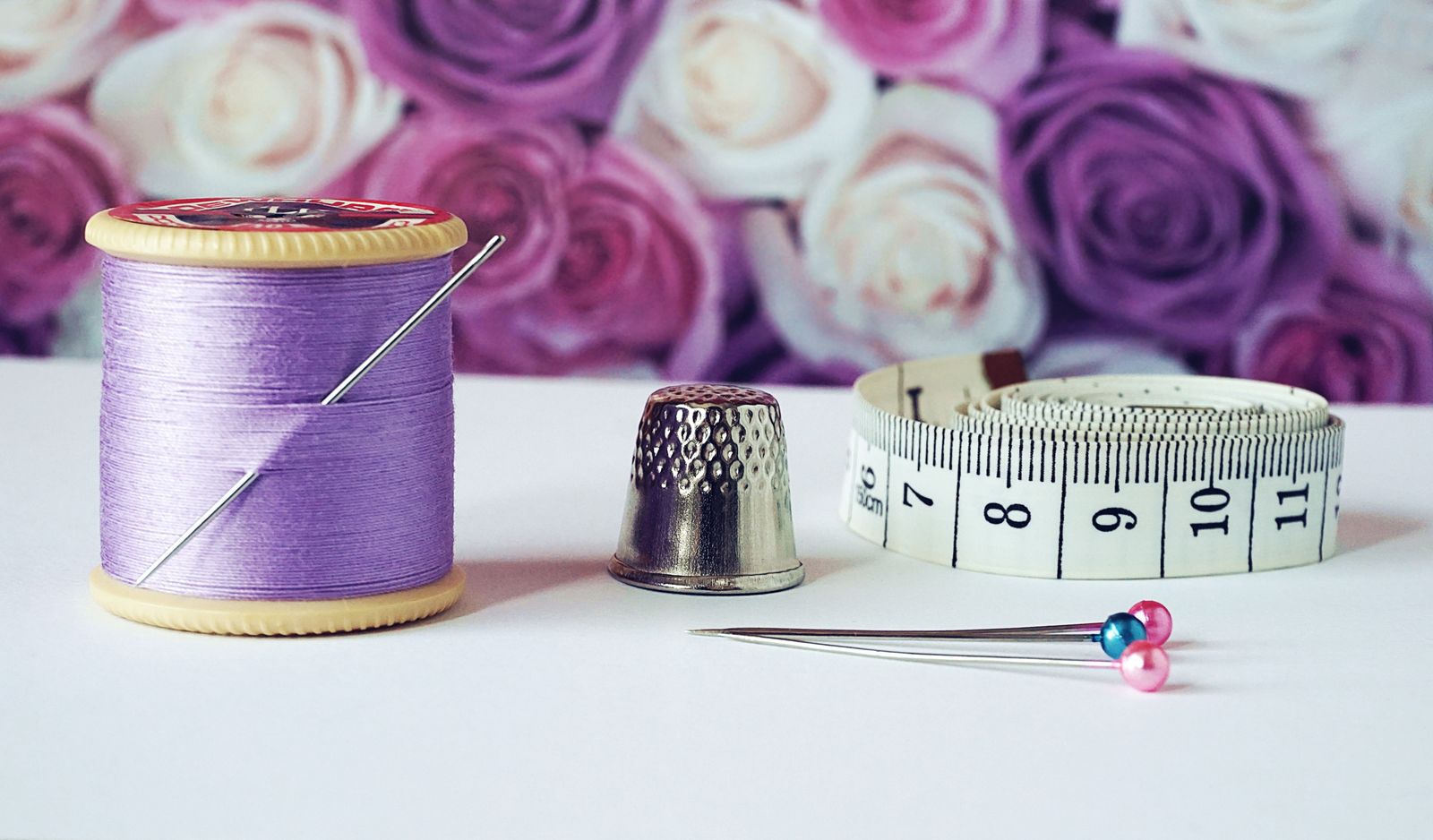
The idea appears among Homemaking’s uses for empty tuna cans. This version keeps the project focused on sewing supplies rather than turning the can into cookware or a candle container. The photograph below illustrates sewing materials, not a finished project we have made.
Prepare the can before choosing a fabric
Wash the empty can, remove the label, and let it dry. Inspect the rim without sliding a bare finger around the cut edge. Wear protective gloves while handling sharp metal, and reject a damaged or rusting can. Use a safe-edge opener where possible and make sure no exposed sharp edge remains before continuing.
Gather a fabric scrap, stuffing or batting, scissors, a needle and thread, and an adhesive suited to the materials. Keep pins out of the work area until the cushion is assembled. If you use hot glue, follow the gun’s instructions and allow the bond to cool before handling it.
Fit the cushion to the container
- Cut a fabric circle larger than the can opening, leaving enough material to gather around the stuffing.
- Make a running stitch around the edge, add the filling, and draw the thread together underneath to form a rounded pad.
- Adjust the filling until the fabric sits smooth and the pad fits the opening without forcing it.
Test the cushion over the empty can before fixing it in place. The pad should sit above the rim with enough depth for the pins you plan to store. A shallow can is not a reason to push long needles down until they strike the metal base.
Secure the gathered underside inside the prepared can, keeping the adhesive away from the usable top of the cushion. Let the bond set for the time specified on its packaging. Add a fabric or ribbon band around the outside if you want to cover the label area, leaving the base level so it does not rock.
Make the holder suit the sewing you do
Try the cushion with a few pins before filling it. If it tips or the padded top shifts, correct the fit rather than relying on the pins to hold it together. Store loose needles and sharp tools where children and pets cannot reach them.
A small scrap project is also a way to coordinate a work area with fabric you already own. For another use of leftover material, our burlap pillow with fabric-marker stenciling shows a different approach to personalizing a plain textile.