
Curtains can hold cooking odors, dust, and stale smells long after the rest of a room has been cleaned. Fabric panels hang near windows, absorb airborne compounds, and often remain untouched between washes. Some people use diluted rubbing alcohol as a quick fabric refresher, but the spray has limits that matter before applying it.
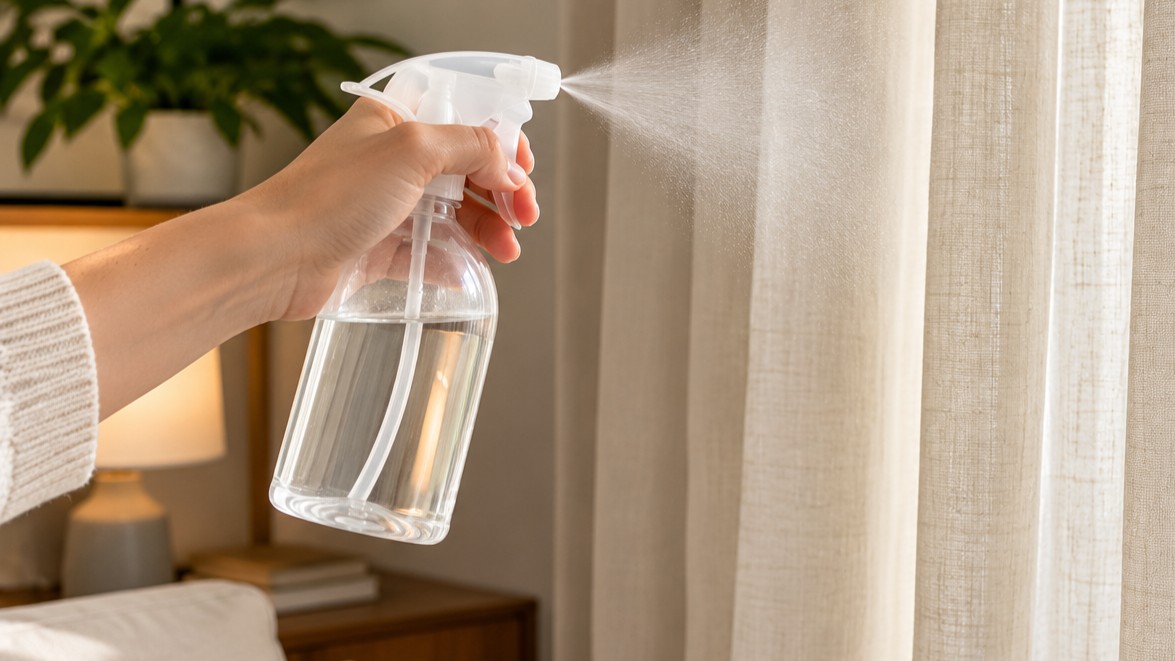
Rubbing alcohol, also called isopropyl alcohol, evaporates faster than water and can dissolve certain oils and residues. Mixing it with distilled water creates a spray that leaves less moisture on fabric than soaking the curtains during cleaning.
The catch is that evaporation doesn’t equal odor removal. Alcohol can leave the fabric dry without removing dust, smoke residue, grease, or other material responsible for the smell. Fabric type, dye stability, and the source of the odor determine whether the treatment is suitable.
Rubbing Alcohol Evaporates, but Trapped Odors May Remain
Isopropyl alcohol is a solvent that can dissolve some oily substances. Its volatility allows it to evaporate from exposed surfaces, although a diluted mixture also contains water that must dry.
That doesn’t mean the spray extracts dirt from curtain fibers. Dust, pollen, cooking grease, and smoke residue can remain after the liquid disappears.
Adding essential oils introduces fragrance, which may cover an unpleasant smell without removing its source. Oils can also leave stains on fabric.
Rubbing alcohol shouldn’t be treated as a fabric disinfectant. Disinfection depends on alcohol concentration, contact time, and the material being treated. A diluted household spray hasn’t been established as an effective method for disinfecting curtains.
If curtains smell of cooking grease, smoke, or mildew, cleaning them according to their care labels addresses the residue rather than covering it with another scent.
How to Use a Diluted Alcohol Spray Without Damaging Curtains
A homemade curtain spray uses:
- ¼ cup rubbing alcohol
- 1 cup distilled water
- A clean, labeled spray bottle
This mixture is intended as a light fabric refresher, not a replacement for washing.
Before applying it, check the curtain care label and manufacturer instructions. Alcohol can affect dyes, coatings, adhesives, and some synthetic fibers.
Avoid using the spray on dry-clean-only curtains unless the fabric care provider confirms it is suitable.
Vacuum the curtains with an upholstery attachment to remove loose dust. Test the diluted solution on a concealed section and allow it to dry before checking for color changes, water marks, or damage.
If the fabric is compatible, apply a fine mist without soaking the material. Leave the curtains open to air-dry in a ventilated room.
Rubbing alcohol is flammable. Keep the spray away from candles, heaters, flames, and ignition sources. Do not use it near an operating heater or apply it to fabric close to a heat source.
Store the labeled bottle away from heat and out of children’s reach.
For curtains that continue smelling after treatment, check for dampness, mold, cooking residue, or other sources of contamination.
A diluted alcohol spray may provide a temporary refresh on compatible fabric, but dry curtains aren’t proof that the material causing the odor has been removed.
Sources: CDC – Chemical Disinfectants, CDC/NIOSH – Isopropyl Alcohol, OSHA – Isopropyl Alcohol, International Chemical Safety Card – Isopropyl Alcohol
Leave a Reply