

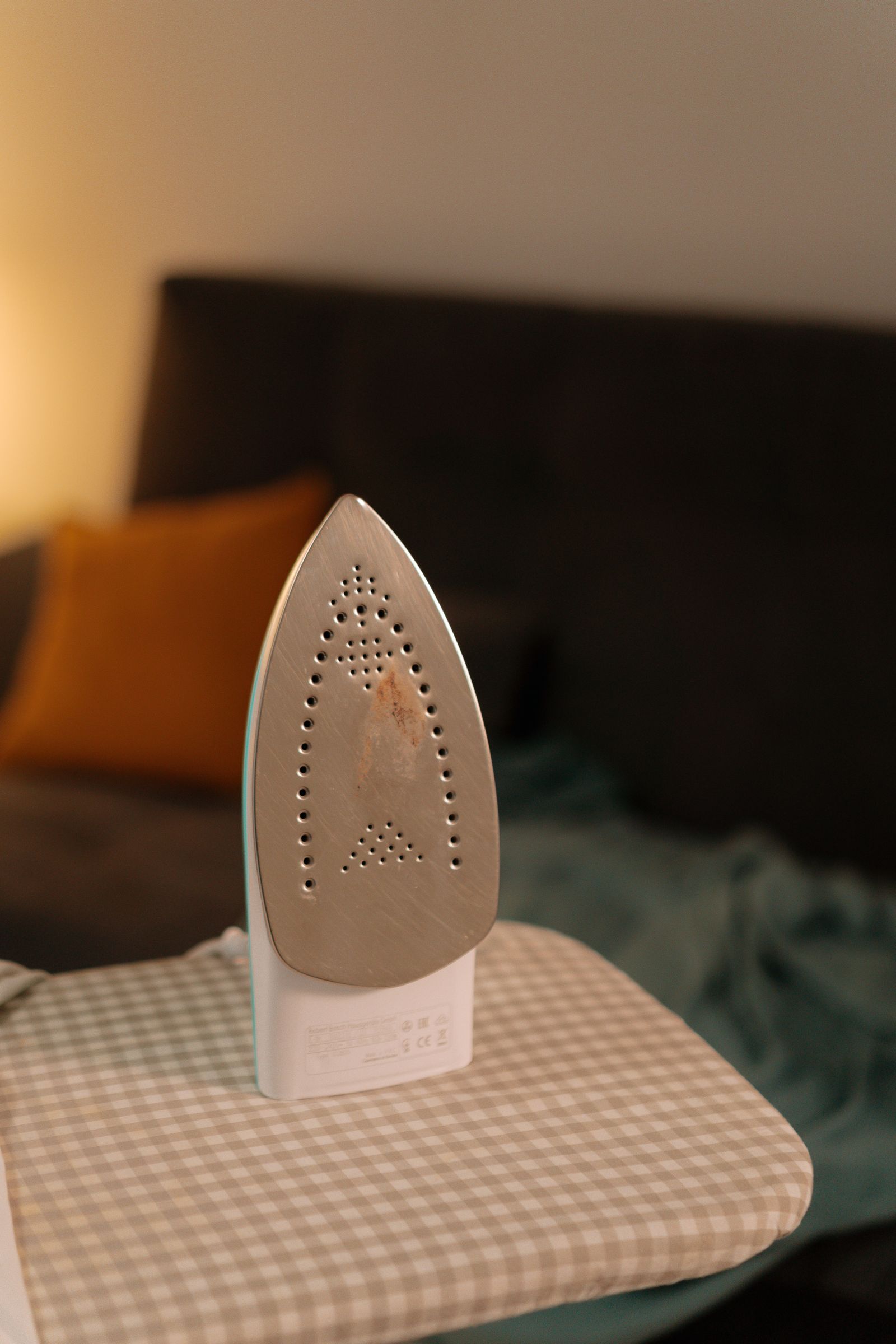
A sheet of foil under an ironing board cover promises to send heat back toward the shirt. Before adding another layer, check the one already beneath the fabric. Padding that’s damp, flattened, or uneven can leave you pressing over the same area while the shirt picks up marks from the board underneath.
Start with the board cool and empty
Unplug the iron and let everything cool. Lift the cover as its fastenings allow and look at the padding beneath it. Check for thin patches, folds, and water marks. Run your hand over the cover once it’s back in place. A ridge under the fabric can transfer to a shirt, especially when you bear down to work on a crease. Tighten or refit the cover according to the board’s instructions.
Read the cover specifications before changing its layers. Brabantia offers covers and padding for different ironing setups, including versions with a reflective layer. That makes the board, pad, and cover a system worth matching. Kitchen foil adds a layer without telling you how it will behave with your board’s steam path, seams, or fastenings. Check with the manufacturer before using it.
Give moisture a chance to escape
If the underside feels damp after steam ironing, leave the board open in a ventilated spot until it dries. Folding it against the wall while the padding is still wet leaves less air around the damp layers. If water keeps dripping underneath, check the iron’s instructions and the cover’s suitability for the appliance you’re using.
Then test one shirt on the dry, flat cover, following the garment’s heat setting. Work in small sections and let each pressed area rest before moving it into a pile. A smooth board and the right setting give you a baseline for deciding whether you need a replacement cover, fresh padding, or a change in technique.

Leave a Reply