

Bread dough can sit for hours without rising, even when the yeast came from a package that hasn’t expired. Dry yeast doesn’t always change color or develop an unusual smell as it loses activity. The problem may begin after the package is opened and stored in a kitchen cabinet.
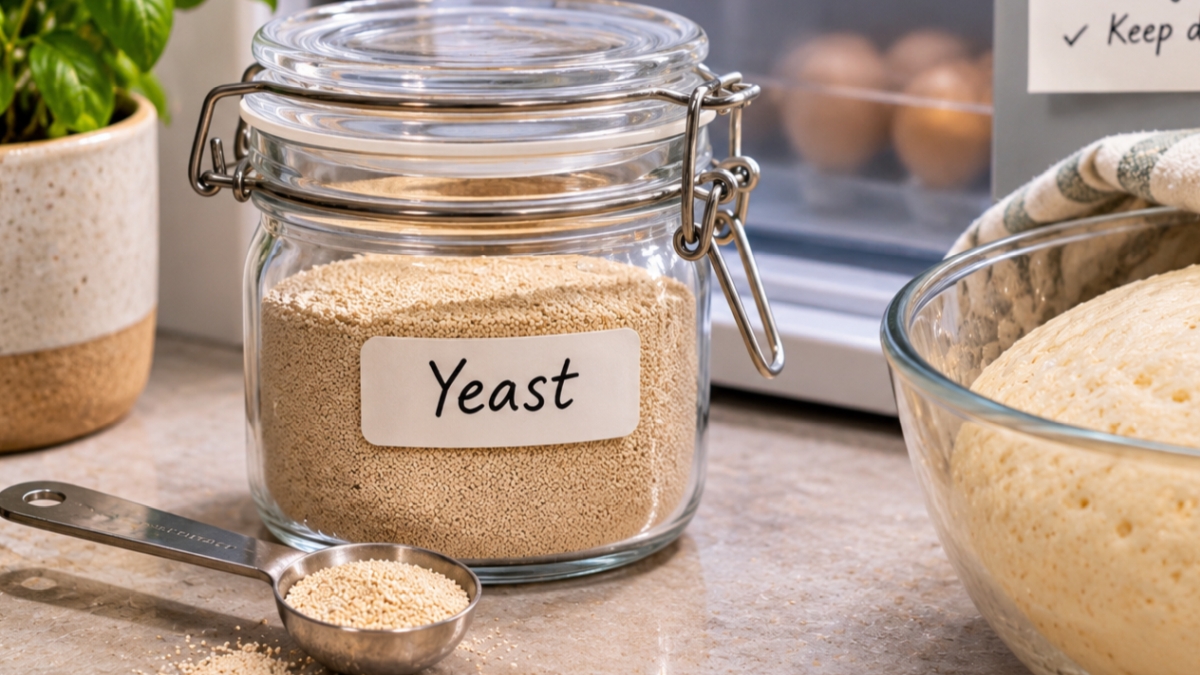
Active dry and instant yeast contain living cells in a dormant state. Heat, moisture, and exposure to air can reduce their ability to produce the carbon dioxide that makes bread dough rise. Refrigeration helps preserve yeast activity, but the container determines how much moisture reaches it during storage.
An opened packet folded shut or left in an unsealed bag can expose the granules to humid air each time the refrigerator door opens. An airtight container protects the yeast from that moisture and limits repeated exposure.
Cold Storage Helps Preserve Yeast, but Moisture Remains a Problem
Dry yeast contains little moisture, allowing the cells to remain dormant until water is added during baking.
Once hydrated, active yeast begins consuming available sugars and producing carbon dioxide through fermentation. The gas becomes trapped in the dough, causing it to expand.
Refrigeration slows the processes that cause yeast to lose activity during storage.
However, refrigerators contain moisture, and condensation can form when cold containers are opened in warmer kitchen air.
If moisture reaches dry yeast during storage, some granules may begin hydrating before use. Repeated exposure can reduce the yeast’s performance.
For this reason, bakers recommend transferring opened yeast into a clean, airtight container rather than leaving the original package unsealed.
Keep the container closed until needed, use a dry measuring spoon, and return it to cold storage after measuring.
For bulk supplies, dividing yeast into smaller containers reduces how often the main supply is exposed to air.
Active dry and instant yeast can follow the same storage method. Unopened packages should be stored according to their labels, while opened packages benefit from refrigeration or freezing.
Instant yeast may retain useful activity for around four to six months after opening when refrigerated, although storage conditions and manufacturer guidance determine its usable life.
Fresh yeast is different. Its higher moisture content gives it a much shorter refrigerated shelf life, often around one to two weeks.
A Warm-Water Test Can Reveal Yeast That Has Lost Activity
Dry yeast can appear unchanged even after its ability to raise dough has declined.
Before using an opened container that has spent months in storage, a short test can help determine whether the yeast remains active.
For the test, use:
- ½ cup warm water at 100–110°F (38–43°C)
- 1 teaspoon sugar
- 2¼ teaspoons dry yeast, equivalent to one standard packet
Pour the warm water into a small bowl and stir in the sugar until dissolved.
Add the yeast, stir, and leave the mixture undisturbed for 5 to 10 minutes.
Active yeast should produce bubbles and a layer of foam as fermentation begins.
If little or no foam appears after 10 to 15 minutes, the yeast may have lost potency. Check that the water temperature was suitable before discarding it.
This test isn’t required before every baking session, but it can prevent wasting flour and other ingredients when the yeast’s storage history is uncertain.
For long-term storage, dry yeast can also be kept in the freezer in a sealed, moisture-resistant container. Keep the main supply closed and remove only the amount needed for baking.
Refrigeration helps preserve opened yeast, but cold storage alone isn’t enough. An airtight container, dry utensils, and protection from condensation help keep the granules ready to make dough rise.


Leave a Reply