

Rust and crusty deposits around water heater connections are problems homeowners might expect after years of use, not weeks. One homeowner noticed corrosion forming on a gas water heater installed by a professional just one month earlier. The photographs raised questions about the materials used to connect the water pipes.
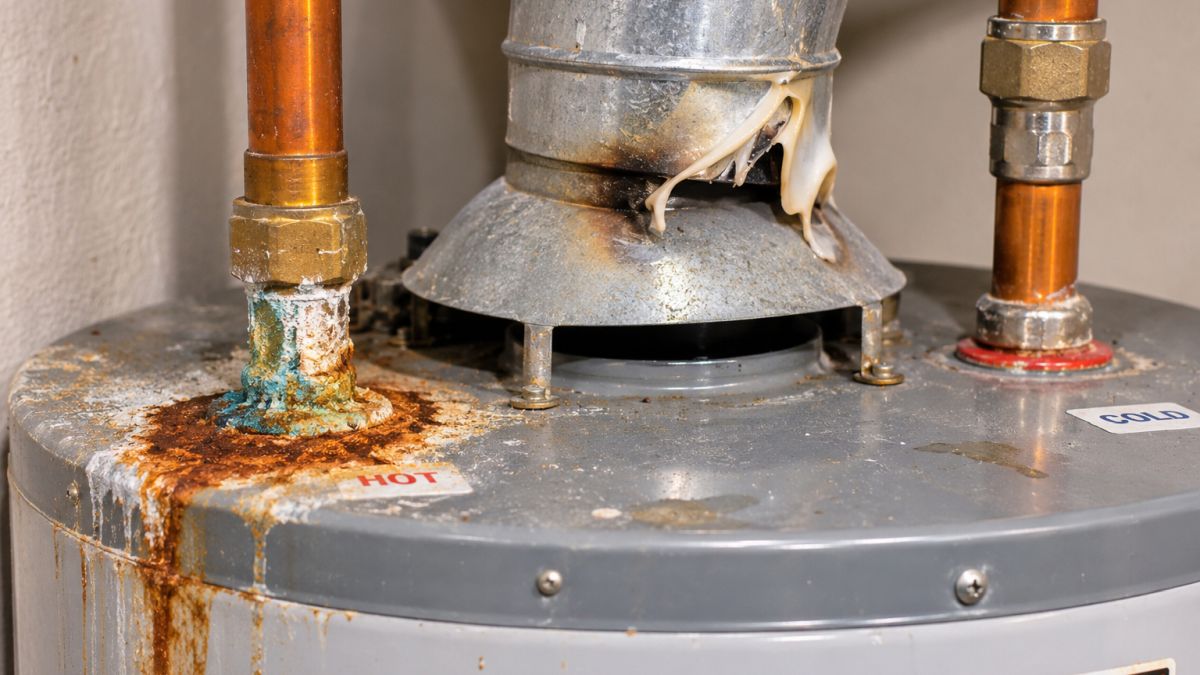
After sharing the pictures on Reddit, the homeowner received responses pointing to possible galvanic corrosion where copper and steel components appeared to meet. Several commenters suspected a missing dielectric union, a fitting designed to help separate dissimilar metals.
But the corrosion wasn’t the only concern. Commenters also noticed what appeared to be melted plastic near the exhaust flue, raising questions about whether combustion gases were leaving the appliance through the vent as intended.
Copper and Steel Connections Raised Questions About Galvanic Corrosion
Galvanic corrosion occurs when dissimilar metals are connected through an electrical path and exposed to an electrolyte, such as water.
The difference between the metals can accelerate corrosion of the less noble material, depending on the installation and water conditions.
In the homeowner’s photographs, copper piping appeared to connect with steel or galvanized components near the top of the tank.
Several Reddit commenters questioned whether the installer had used a dielectric union or another approved transition fitting.
These fittings can help reduce galvanic corrosion by separating incompatible metals, although the correct connection method depends on the appliance manufacturer’s instructions and local plumbing requirements.
The corrosion appeared after about 30 days, making the installation worth examining before the damage progressed.
Rust-colored deposits, green staining, or crusty buildup around fittings can indicate corrosion or moisture exposure. However, photographs alone cannot establish whether the cause is galvanic corrosion, a leaking joint, or another installation problem.
A qualified plumber can inspect the connections, identify the materials, and determine whether the fittings meet the heater’s installation requirements.
Melted Plastic Near the Flue Raised a More Serious Concern
The second problem noticed in the photographs involved the gas water heater’s exhaust vent.
Commenters pointed to what appeared to be melted plastic near the flue and questioned whether hot combustion gases were escaping into the surrounding area.
Gas water heaters produce exhaust that must travel through an approved venting system to the outdoors.
If the vent is blocked, disconnected, or unable to maintain proper draft, combustion gases can spill into the room instead of leaving the building.
This condition is known as backdrafting or spillage, depending on the circumstances.
Improper venting can expose occupants to carbon monoxide, an odorless gas produced during incomplete combustion.
Melted or discolored material near a flue can be a warning sign of excessive heat, but it doesn’t confirm backdrafting without an inspection.
The Reddit discussion didn’t establish whether the vent was installed incorrectly or whether combustion gases had entered the home.
A licensed gas-appliance technician should inspect the vent connections, draft performance, combustion air supply, and surrounding heat damage before the heater is returned to service.
A homeowner who suspects venting trouble should stop using the appliance until it has been assessed. Carbon monoxide alarms provide an additional safeguard but cannot replace a proper vent inspection.
The original discussion also raised the possibility that a small, inexpensive fitting could address the corrosion issue, while the venting concern might require a separate repair.
The water heater’s age made the corrosion unexpected, but the suspected exhaust problem was the more urgent finding. Both conditions require inspection rather than assuming a new appliance was installed without defects.
Sources: The Cool Down — Homeowner Confused After Professionally Installed Water Heater Corroded in a Month, U.S. Department of Energy — Water Heating, CDC — Carbon Monoxide Poisoning

Leave a Reply