

Green buildup can appear inside a birdbath even when the water gets replaced. Algae, bird droppings, pollen, and fallen leaves collect in the basin, leaving a slippery film on the surface. Adding fresh water may make the birdbath look cleaner, but the residue remains beneath it.
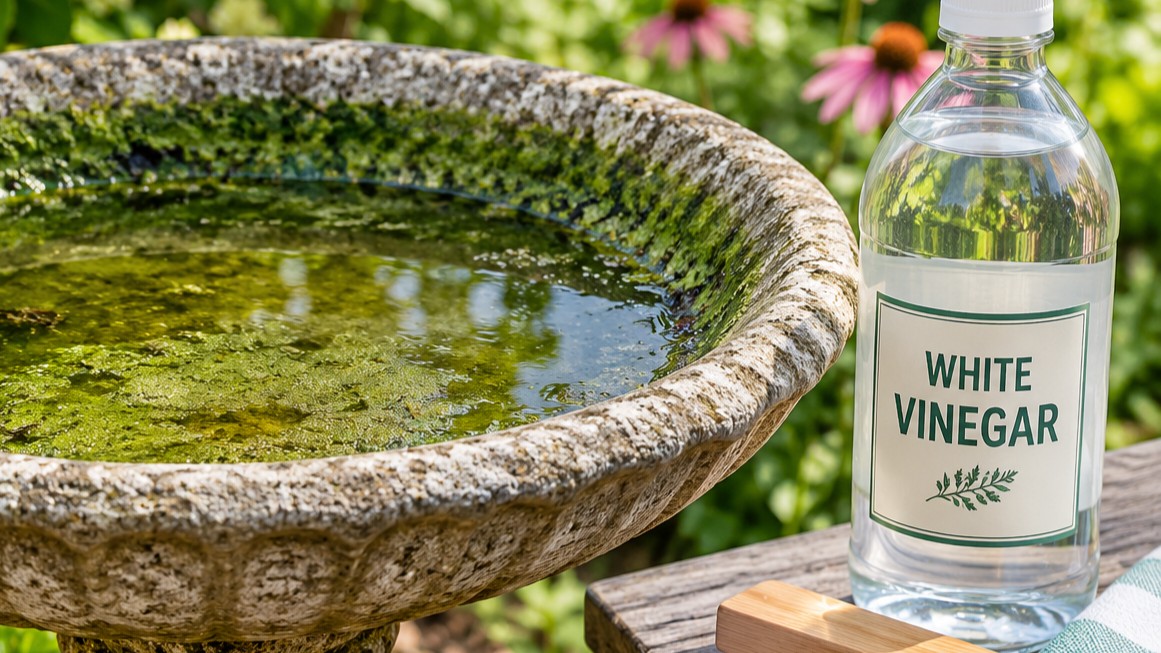
White vinegar is one household ingredient used to remove some of that buildup. Its acidity can help loosen mineral deposits and surface grime, making the basin easier to scrub without relying on a specialized cleaning product.
The important distinction is that vinegar belongs in the cleaning process, not in the water birds drink. Once the residue has been removed, the basin needs a thorough rinse before fresh water goes back in.
Vinegar Can Loosen Buildup, but It Doesn’t Replace Scrubbing
Birdbaths collect organic material from the surrounding garden. Leaves, pollen, dust, and droppings enter the water, while sunlight and nutrients can encourage algae growth.
The green coating that develops on the basin may contain algae mixed with dirt and other residue.
White vinegar contains acetic acid, which reacts with certain mineral deposits and can help loosen some material attached to the surface.
However, vinegar doesn’t guarantee the removal of every type of algae or bacteria. A clean-looking birdbath can still contain microorganisms, particularly when contaminated water has remained in the basin.
Scrubbing removes the film and debris that a liquid cleaner may leave behind.
The material of the birdbath also matters. Acidic cleaners can damage marble, limestone, and some concrete or natural stone finishes. Check the manufacturer’s care instructions before using vinegar.
Leave the Vinegar Solution for 20 Minutes, Then Rinse
Start by emptying the birdbath and removing leaves, feathers, and other debris from the basin.
For a birdbath made from a material compatible with vinegar, dilute white vinegar with warm water and apply enough solution to wet the stained areas.
Leave it in contact with the surface for about 20 minutes to help loosen deposits.
Use a stiff brush suitable for the basin material to scrub the interior, paying attention to corners and textured sections where residue collects.
If the birdbath contains decorative stones, remove them and clean them before returning them to the basin.
Empty the cleaning solution and rinse the birdbath with fresh water until no vinegar residue remains.
Refill it with clean drinking water before allowing birds to return.
Never add vinegar to a filled birdbath as a treatment for algae while birds are using it. The cleaning solution must be removed before the basin is put back into service.
Fresh Water and Frequent Cleaning Help Prevent Green Buildup
A birdbath can develop new algae growth after cleaning if water remains in place and organic debris collects again.
Change the water each day, particularly during warm weather or when several birds visit the basin.
Remove visible droppings and leaves when they appear rather than waiting for the water to turn green.
Clean the birdbath at least once a week, with more frequent cleaning when the basin becomes contaminated.
Place the birdbath where birds have access to cover, but avoid locations where falling leaves and debris collect in the water.
Shade may help limit algae growth, although it won’t prevent contamination from droppings or other material.
Vinegar can help remove some deposits during cleaning, but the step that protects visiting birds is removing the cleaning solution, rinsing the basin, and providing fresh water.


Leave a Reply