

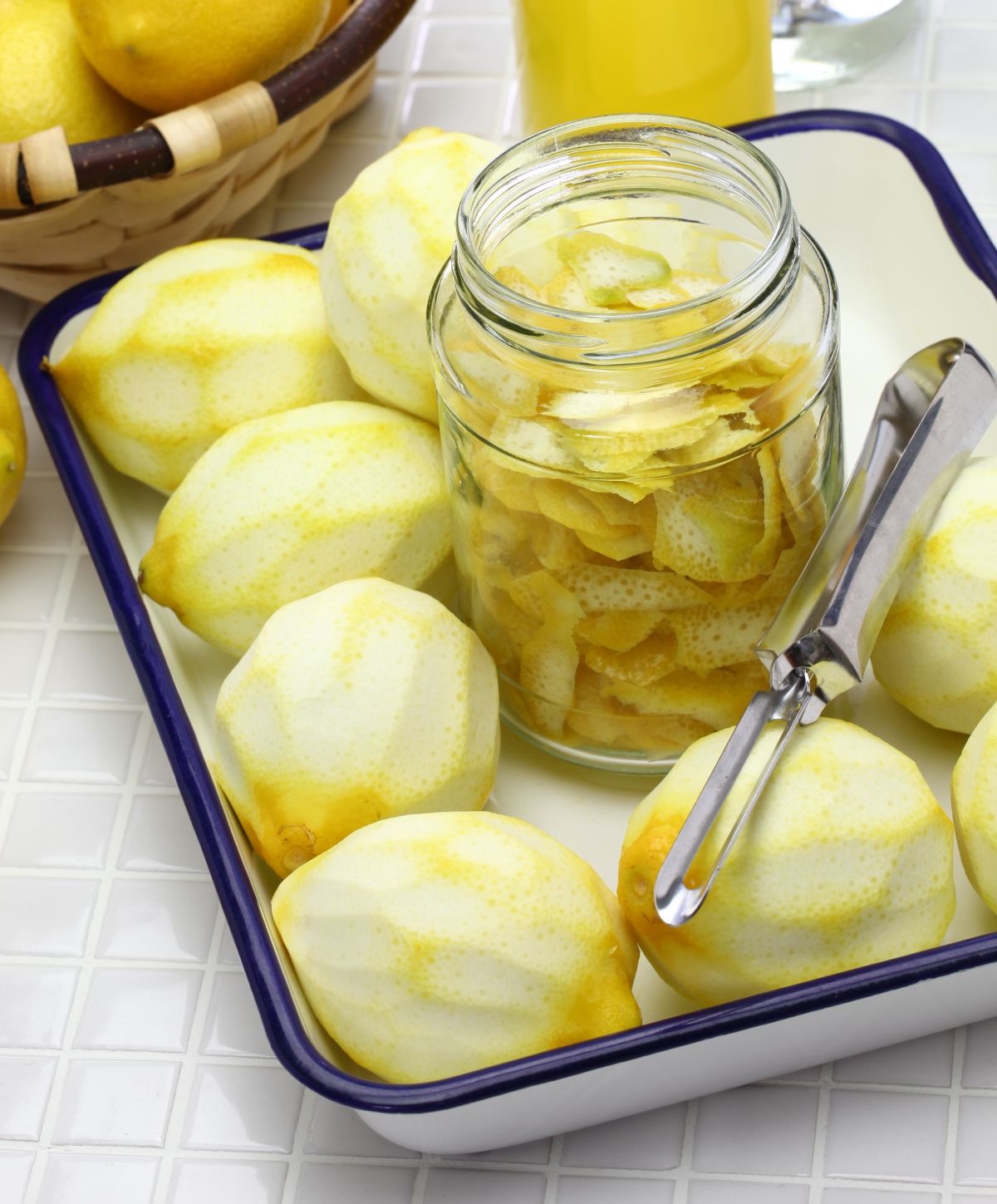
Save the peels after squeezing a lemon, and they can become part of a homemade cleaning spray. Soaked in white vinegar, they add a citrus scent to a mixture used for certain household deposits and stains. Before reaching for the countertop, though, check its material: the same acidity that tackles mineral buildup can damage stone.
What It’s For
White vinegar contains acetic acid, which helps dissolve mineral deposits left by hard water. Lemon peels add citrus fragrance during soaking, giving the mixture a different smell without turning it into a cleaner for every surface.
A recipe published on the University of California Agriculture and Natural Resources’ Under the Solano Sun blog uses citrus peels steeped in vinegar, then strained and diluted. It lists glass doors and some bathroom surfaces among its uses. The post shares a household recipe, rather than results from a controlled cleaning trial.
Where It Can Be Used
Glass shower doors with light mineral residue are one potential use, provided their care instructions permit vinegar. Protective coatings, surrounding metal finishes, and nearby stone need separate consideration, so “safe for glass” does not mean safe for the whole shower.
Start with the surface manufacturer’s instructions, then test an inconspicuous spot. Use a small amount, wipe it off, and rinse where required rather than leaving the mixture soaking across an unknown finish. The American Cleaning Institute advises checking manufacturer guidance before using vinegar.
How to Make It
The citrus-infusion method takes two to three weeks:
- Put lemon peels in a clean glass jar with a lid.
- Pour in enough white vinegar to cover the peels.
- Close the jar and leave it in a cool, dark place for two to three weeks.
- Strain out the peels and other solids.
- Mix equal parts strained vinegar and water in a spray bottle.
Those proportions follow the UC Agriculture and Natural Resources blog recipe. Label the bottle so it cannot be mistaken for plain water or a food ingredient.
Where It Can Cause Damage
Marble, limestone, and travertine are poor places to experiment with acidic cleaners. Vinegar can etch these stones, leaving dull marks where it has reacted with the surface. Those marks are damage, not residue that another wipe will remove. The Natural Stone Institute advises against lemon- and vinegar-based products on these materials.
Granite also needs care. Its mineral composition and any applied sealer affect compatibility, so the institute recommends consulting the stone supplier before using vinegar. Adding lemon peel or water does not establish that the mixture is safe for the countertop.
Wood floors and furniture belong off the default-use list as well. The American Cleaning Institute identifies them among surfaces that vinegar can damage.
What the Lemon Scent Does Not Tell You
A citrus smell is no measure of disinfection. Vinegar is not a substitute for an EPA-registered disinfectant, and soaking peels in it does not establish germ-killing performance. Choose a product labeled for the task when disinfection is needed.
Never combine this spray with bleach or other cleaning products. CDC guidance warns that mixing bleach with other cleaners can release dangerous vapors, which also matters when cleaning a toilet that contains another treatment.
Save the peels if you want to try the infusion, but let the surface’s care instructions decide where the bottle goes.
Leave a Reply