

You sweep the hall, then someone comes in from the yard and leaves a trail of grit past the front door. The old habit of taking shoes off at the door works better when the entry gives you somewhere to wipe them and somewhere to leave them. An outdoor mat takes the first scrape. A second mat inside catches what the first one misses and gives you a place to stop.
Give the first mat the dirty work
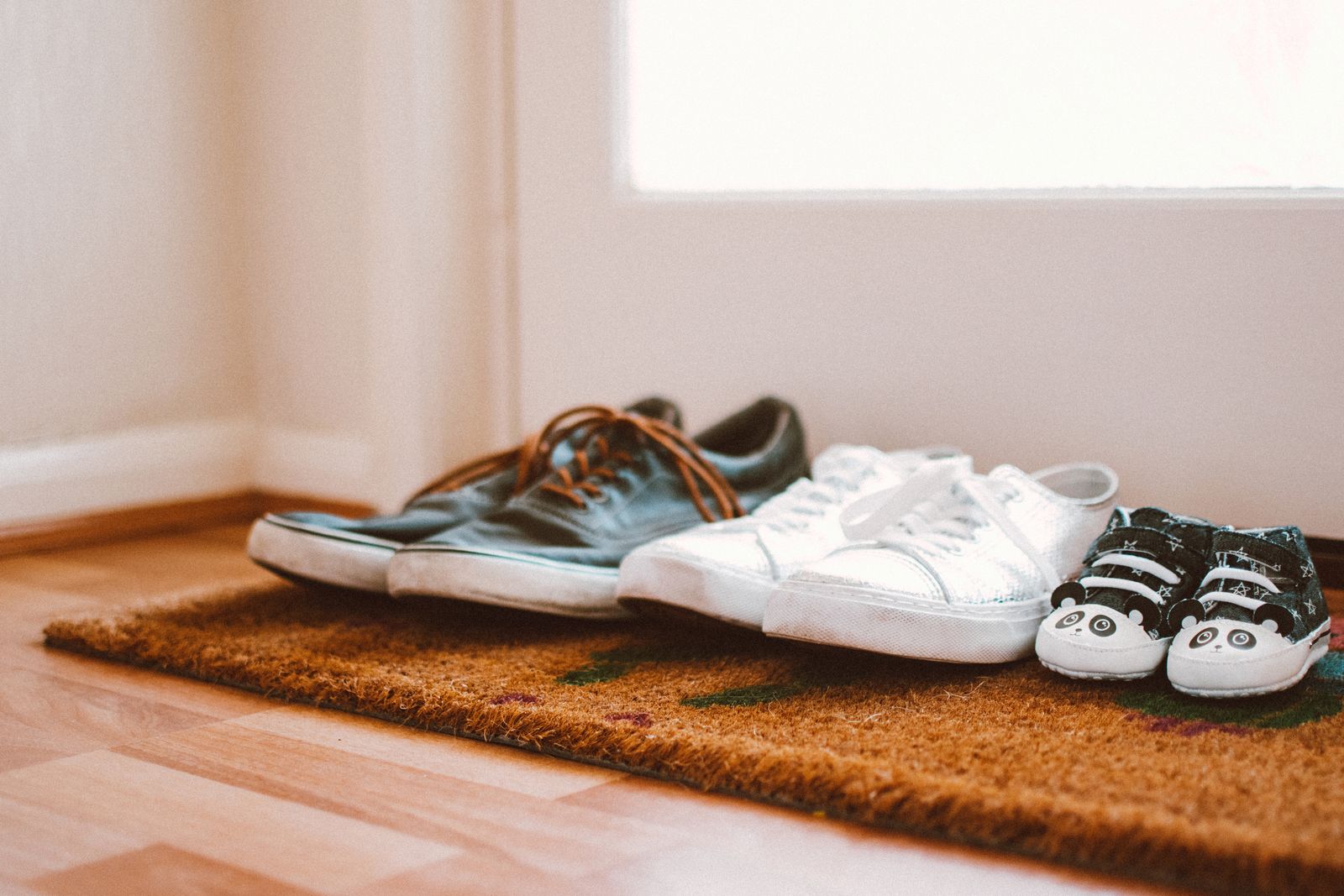
Put a textured mat outside where people naturally step as they reach for the door. A coarse surface gives you something to rub your soles against, especially when the treads are holding bits of soil or dried leaves. The mat needs to sit flat and clear the door as it swings. If you can step over it without thinking, slide it into the route you actually take.
Make the second mat the place where shoes come off
Just inside, put down an absorbent mat for damp soles. Set a boot tray or shoe rack beside it, within reach from the mat. If the rack is across the hall, wet shoes still have to cross the floor to get there. A spot near the latch side of the door can work in a tight entry, provided the tray stays clear of the swing and the walking route.
There’s a reason this setup shows up in guidance beyond housekeeping. The U.S. Environmental Protection Agency advises using mats on both sides of entrances and removing shoes to help keep potentially lead-contaminated soil from being tracked indoors. Washington State’s Department of Ecology also suggests giving shoes a dedicated spot by the door.
After a rainy day, check where the first muddy print lands. If it shows up beyond the indoor mat, move the mat or shoe tray closer to that first step. Shake out the outside mat and let the inside one dry when it gets soaked.
Leave a Reply