
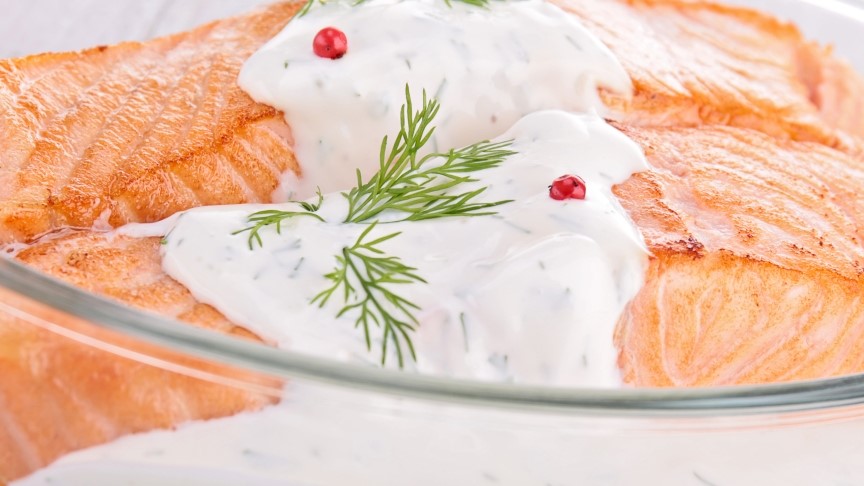
Salmon can develop dry edges before the center finishes cooking, especially when exposed to hot air in an oven or air fryer. Adding more oil to the pan doesn’t guarantee the fish will retain its moisture. One cooking method uses a thin layer of mayonnaise spread across the fillet before it reaches the heat.
Mayonnaise contains oil, egg yolk, and an acidic ingredient such as vinegar or lemon juice. The mixture forms a coating that helps seasonings adhere to the salmon and adds fat to its surface during cooking.
The technique can produce a browned, seasoned exterior while the fish remains tender inside. However, mayonnaise doesn’t seal moisture into salmon. Cooking temperature, fillet thickness, and internal temperature still determine how much water the fish loses.
Mayonnaise Changes the Surface of Salmon During Cooking
Mayonnaise is an emulsion made from oil dispersed into a mixture containing egg yolk and other ingredients.
Its thick consistency allows it to spread across salmon without running off as fast as plain oil.
This helps garlic, paprika, pepper, and other seasonings remain in contact with the fish instead of falling into the cooking basket or baking dish.
As the salmon heats, the coating changes. Water evaporates, the emulsion can break down, and the remaining fat and solids contribute to the cooked surface.
The oil provides fat, while proteins and other compounds in the mayonnaise can participate in browning reactions.
A thin coating may also reduce direct surface drying during part of the cooking process, although it doesn’t create a waterproof barrier.
Salmon contains proteins that contract as temperatures rise, releasing moisture regardless of the coating.
Overcooking can still leave the fish dry, even when covered with mayonnaise.
The finished salmon doesn’t have to taste like mayonnaise. Garlic, lemon, paprika, and the fish’s own flavor can dominate, although the coating may leave some of its original taste.
How to Coat Salmon With Mayonnaise Before Cooking
For two salmon fillets, use:
- 2 salmon fillets
- 2 tablespoons mayonnaise
- 1 teaspoon lemon juice
- 1 teaspoon garlic puree or minced garlic
- ½ teaspoon smoked paprika
- Salt and black pepper
- A small amount of olive oil, optional
Combine the mayonnaise, lemon juice, and garlic in a small bowl.
In another bowl, mix the smoked paprika with salt and black pepper.
Pat the salmon dry with paper towels, then distribute the seasoning across the flesh.
Spread the mayonnaise mixture over the top of each fillet, forming a thin, even coating.
Avoid adding a thick layer, which can remain wet and prevent the surface from browning as intended.
For an air fryer, the source recipe uses 150°C (302°F) for approximately 10 minutes.
For an oven, preheat to 160°C (320°F) and bake for approximately 17 to 20 minutes.
Cooking times vary with fillet thickness, starting temperature, and appliance performance.
Use a food thermometer rather than relying on appearance alone. The USDA recommends cooking fish to an internal temperature of 145°F (63°C) at the thickest point.
The flesh should separate into flakes when cooked, but color and texture alone aren’t as dependable as a temperature measurement.
The mayonnaise mixture can be prepared ahead and kept covered in the refrigerator for up to one day before use.
Mayonnaise adds a fat-based coating that holds seasonings against salmon and influences surface browning. It can improve the finished texture, but preventing dry fish still depends on controlling cooking time and temperature.
Sources: USDA — Safe Minimum Internal Temperature Chart, Encyclopaedia Britannica — Mayonnaise, Family Style Food
Leave a Reply