

Snake plants can develop yellow leaves and soft stems even when their owners haven’t changed a thing about their care. The same watering schedule that worked through summer may leave the soil wet for too long once November arrives. Shorter days and cooler indoor conditions change how much moisture the plant uses.
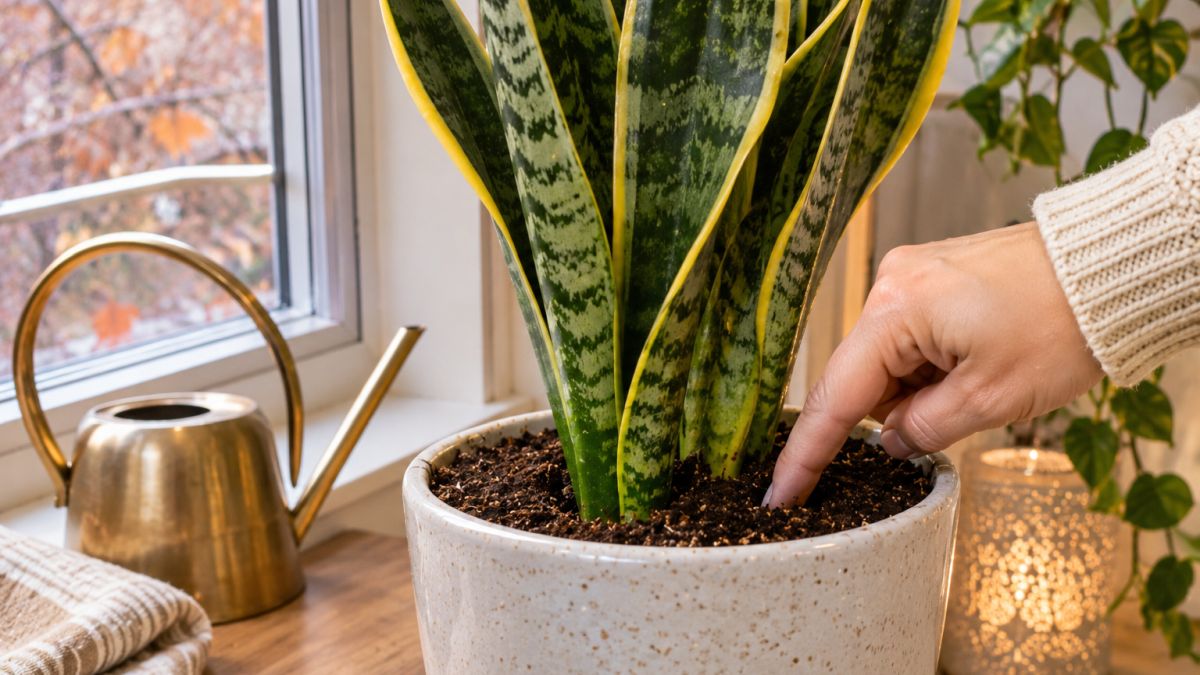
Snake plants (Dracaena trifasciata) store water in their thick leaves, allowing them to tolerate dry conditions. As daylight decreases, growth often slows, and the roots absorb less water. Moisture left in the potting mix takes longer to evaporate, increasing the risk of root rot.
The change doesn’t mean snake plants should go without water all winter. Their needs depend on light, room temperature, pot size, and drainage rather than a fixed calendar.
Shorter Days Mean Snake Plant Roots Use Less Water
During spring and summer, longer daylight hours support plant growth and water use.
As November brings fewer hours of sunlight, snake plants growing without supplemental lighting often produce fewer new leaves.
Their water requirements decrease, but the soil may remain wet if watering continues at the same intervals.
Snake plants have fleshy leaves that hold moisture, making them more tolerant of dry soil than prolonged saturation.
When roots remain in wet potting mix without enough oxygen, they can deteriorate and become vulnerable to rot.
Soft yellow leaves, a mushy base, and collapsing stems can indicate excessive moisture, although cold damage may produce similar symptoms.
Before watering, check the soil several inches below the surface. If moisture remains, wait until the potting mix has dried.
Some snake plants may need water only every three to six weeks during winter, but that interval isn’t suitable for every home.
When the soil needs water, soak the potting mix and allow the excess to drain through the container’s drainage holes. Empty the saucer afterward.
November Also Changes Where Your Snake Plant Should Sit
Snake plants tolerate low light, but a dark corner that provided enough daylight during summer may become unsuitable as winter approaches.
Moving the pot closer to a bright window can help compensate for shorter days.
Choose a location with bright, indirect light, and avoid exposing a plant accustomed to shade to intense direct sunlight without an adjustment period.
Cold windows present another concern. Snake plants prefer temperatures around 60–85°F (16–29°C) and can suffer damage during prolonged exposure below approximately 50–55°F (10–13°C).
Keep leaves away from freezing window glass and move pots out of cold drafts near exterior doors.
Fertilizer needs also decline when growth slows. Stop routine feeding until new growth returns, unless the plant remains active under suitable indoor lighting.
November isn’t an ideal time to repot a healthy snake plant. Moving it into a larger container can leave excess soil wet for longer, increasing the risk of root problems.
Check that drainage holes remain open, and remove dust from the leaves with a damp cloth so the plant can receive available light.
The biggest November adjustment is watering according to soil moisture instead of following a summer schedule. Less daylight means slower growth and less water use, making excess moisture a greater threat than a short dry period.
Leave a Reply