

Rain leaves useful clues around a wooden shed. A dark lower board, a puddle beside the base, or a stain beneath a roof joint tells you where to look before cold weather makes repairs harder. Walk around the building after rain and compare what dries with what stays damp.
Moisture is central to wood decay. The USDA Forest Products Laboratory’s principles for protecting wood buildings explain why controlling water matters. A coat of finish cannot substitute for finding a leak or a place where water keeps collecting.
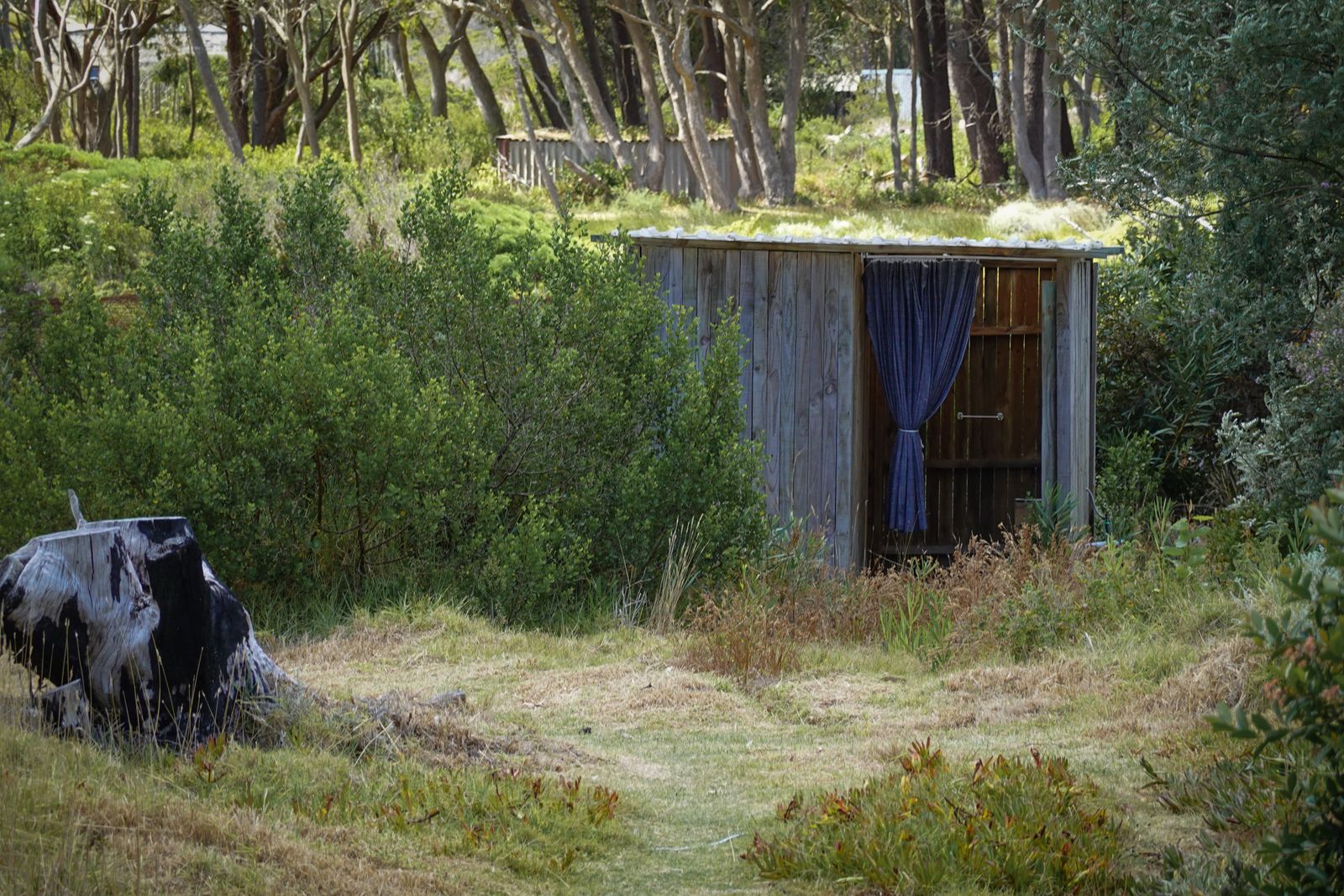
Start at the roof and follow the water down
Inspect from the ground for missing or damaged covering, lifted edges, and debris that may obstruct drainage. Check inside for staining that lines up with a roof joint or opening. Do not climb onto a shed roof whose structure or load capacity you have not established.
Record the location with a photograph, then check it during another rain if that can be done from a safe position. A recurring wet patch is more useful evidence than a one-time impression. Have damaged roofing repaired with the material and method specified for the building.
Clear the areas where water lingers
Look around the lower walls and base for piles of leaves, soil, or stored objects pressed against the timber. Remove loose debris without disturbing supports, then see whether the area drains after rain. Note standing water and blocked drainage rather than covering them with another layer of material.
Inside, check whether stored items prevent you from seeing wall-floor junctions or known wet areas. Leave access for inspection and keep designed ventilation open. If there is a water problem under the building, arrange an assessment of the base rather than trying to lift a loaded shed with improvised equipment.
Choose treatment after assessing condition
Tiger Sheds’ treatment guidance stresses that timber buildings need the appropriate ongoing treatment, including buildings sold with a guarantee. Check your shed’s instructions for compatible products, preparation, and application conditions instead of assuming any exterior paint offers the same protection.
Soft, crumbling, or deformed timber needs more than a cosmetic cover. If a floor, support, or wall appears weakened, keep people out of the affected area and have the structure assessed. Finding the water source and the extent of damage comes before choosing filler or a fresh color.
Finish with a short maintenance record: roof issue, drainage issue, damaged timber, and the work required. That gives you a list to act on rather than a general intention to “weatherproof the shed” when the next storm arrives.